BBS10 Polyclonal Antibody, Invitrogen™
Manufacturer: Thermo Scientific
Select a Size
| Pack Size | SKU | Availability | Price |
|---|---|---|---|
| Each of 1 | PIPA5100128-Each-of-1 | In Stock | ₹ 46,502.50 |
PIPA5100128 - Each of 1
In Stock
Quantity
1
Base Price: ₹ 46,502.50
GST (18%): ₹ 8,370.45
Total Price: ₹ 54,872.95
Antigen
BBS10
Classification
Polyclonal
Conjugate
Unconjugated
Gene
BBS10
Gene Alias
1300007O09Rik; AI452285; Bardet-Biedl syndrome 10; Bardet-Biedl syndrome 10 (human); Bardet-Biedl syndrome 10 protein; Bardet-Biedl syndrome 10 protein homolog; Bbs10; C12orf58; RGD1560748; si:dkey-30c15.16
Host Species
Rabbit
Purification Method
Affinity chromatography
Regulatory Status
RUO
Gene ID (Entrez)
100034535, 71769, 79738
Content And Storage
-20°C
Form
Liquid
Applications
Immunocytochemistry, Immunohistochemistry (Paraffin), Western Blot
Concentration
1 mg/mL
Formulation
PBS with 50% glycerol and 0.02% sodium azide; pH 7.4
Gene Accession No.
Q8TAM1, Q9DBI2
Gene Symbols
BBS10
Immunogen
A synthesized peptide derived from human BBS10(Accession Q8TAM1), corresponding to amino acid residues A160-V210.
Quantity
100 μL
Primary or Secondary
Primary
Target Species
Human, Mouse, Zebrafish
Product Type
Antibody
Isotype
IgG
Related Products
Description
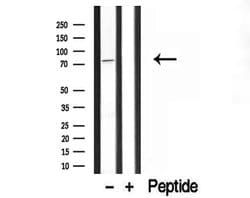
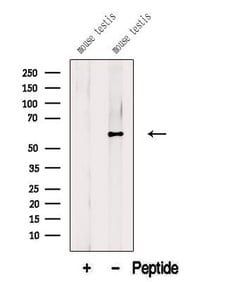
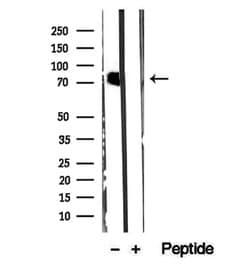
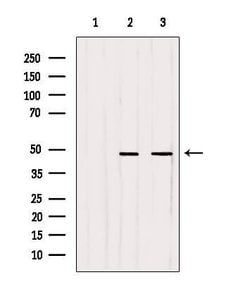
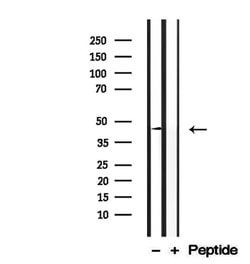
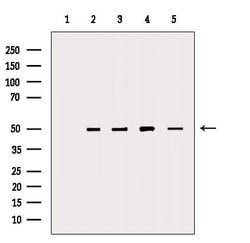
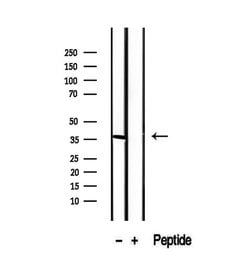
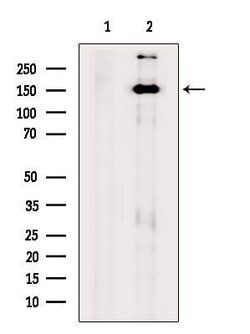
- Antibody detects endogenous levels of total BBS10
- BBS10 is a member of the Bardet-Biedl syndrome (BBS) gene family
- Bardet-Biedl syndrome is an autosomal recessive disorder characterized by progressive retinal degeneration, obesity, polydactyly, renal malformation and mental retardation
- The proteins encoded by BBS gene family members are structurally diverse and the similar phenotypes exhibited by mutations in BBS gene family members is likely due to their shared roles in cilia formation and function
- Many BBS proteins localize to the basal bodies, ciliary axonemes, and pericentriolar regions of cells
- BBS proteins may also be involved in intracellular trafficking via microtubule-related transport
- The protein encoded by this gene is likely not a ciliary protein but rather has distant sequence homology to type II chaperonins
- As a molecular chaperone, this protein may affect the folding or stability of other ciliary or basal body proteins
- Inhibition of this protein's expression impairs ciliogenesis in preadipocytes.