PIPA5101437
Arylsulfatase G Polyclonal Antibody, Invitrogen™
Manufacturer: Thermo Scientific
Select a Size
| Pack Size | SKU | Availability | Price |
|---|---|---|---|
| Each of 1 | PIPA5101437-Each-of-1 | In Stock | ₹ 46,502.50 |
PIPA5101437 - Each of 1
In Stock
Quantity
1
Base Price: ₹ 46,502.50
GST (18%): ₹ 8,370.45
Total Price: ₹ 54,872.95
Antigen
Arylsulfatase G
Classification
Polyclonal
Conjugate
Unconjugated
Gene
ARSG
Gene Alias
6330406P08Rik; AI846872; Arsg; Arylsulfatase G; ASG; KIAA1001; RGD1306571; UNQ839/PRO1777
Host Species
Rabbit
Purification Method
Affinity chromatography
Regulatory Status
RUO
Gene ID (Entrez)
22901, 303631, 74008
Content And Storage
-20°C
Form
Liquid
Applications
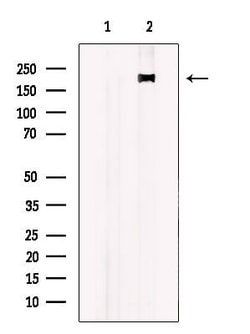
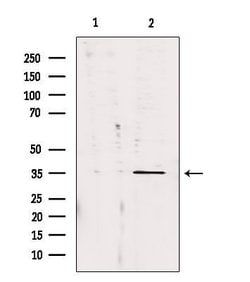
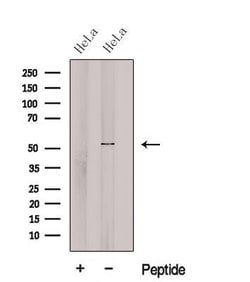
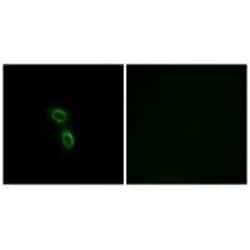
Immunohistochemistry (Paraffin), Western Blot
Concentration
1 mg/mL
Formulation
PBS with 50% glycerol and 0.02% sodium azide; pH 7.4
Gene Accession No.
Q32KJ9, Q3TYD4, Q96EG1
Gene Symbols
ARSG
Immunogen
A synthesized peptide derived from human ARSG(Accession Q96EG1), corresponding to amino acid residues P260-C310.
Quantity
100 μL
Primary or Secondary
Primary
Target Species
Human, Mouse, Rat
Product Type
Antibody
Isotype
IgG
Related Products



Description
- Antibody detects endogenous levels of total ARSG
- Sulfatases, such as ARSG, hydrolyze sulfate esters from sulfated steroids, carbohydrates, proteoglycans, and glycolipids
- They are involved in hormone biosynthesis, modulation of cell signaling, and degradation of macromolecules
- This gene, a novel arylsulfatase, has activity toward pseudosubstrates including p-nitrocatechol sulfate and 4-methylumbelliferyl sulfate
- Activity is competitively inhibited by phosphate
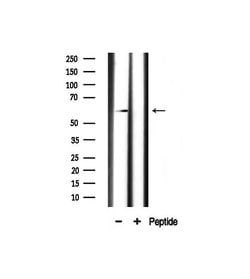
- The unprocessed protein is active as a 63-kDa monomer and demonstrates an acidic pH optimum as typically seen for lysosomal sulfatases
- The protein accumulates within lysosomes and is also a glycoprotein that binds specifically to mannose 6-phosphate receptors.