PIPA5104340
cGAS Polyclonal Antibody, Invitrogen™
Manufacturer: Thermo Scientific
Select a Size
| Pack Size | SKU | Availability | Price |
|---|---|---|---|
| Each of 1 | PIPA5104340-Each-of-1 | In Stock | ₹ 46,502.50 |
PIPA5104340 - Each of 1
In Stock
Quantity
1
Base Price: ₹ 46,502.50
GST (18%): ₹ 8,370.45
Total Price: ₹ 54,872.95
Antigen
cGAS
Classification
Polyclonal
Conjugate
Unconjugated
Gene
CGAS
Gene Alias
C6orf150; h-cGAS; MB21D1
Host Species
Rabbit
Purification Method
Affinity chromatography
Regulatory Status
RUO
Gene ID (Entrez)
115004
Content And Storage
-20°C
Form
Liquid
Applications
Western Blot
Concentration
1 mg/mL
Formulation
PBS with 50% glycerol and 0.02% sodium azide; pH 7.4
Gene Accession No.
Q8N884
Gene Symbols
CGAS
Immunogen
A synthesized peptide derived from human MB21D1(Accession Q8N884), corresponding to amino acid residues E103-L153.
Quantity
100 μL
Primary or Secondary
Primary
Target Species
Human
Product Type
Antibody
Isotype
IgG
Related Products
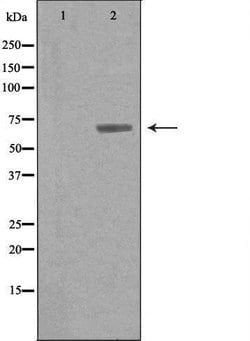

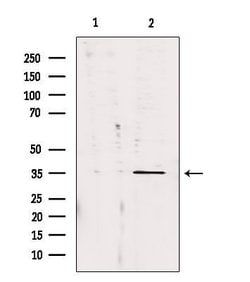
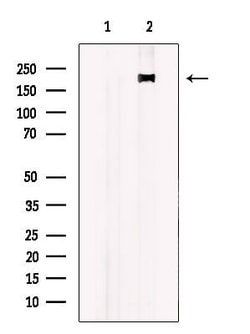

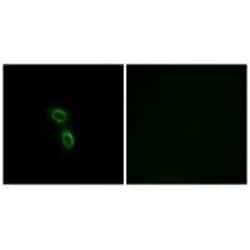


Description
- Antibody detects endogenous levels of total C6orf150
- cGAS (Cyclic GMP-AMP synthase) is a nucleotidyltransferase that catalyzes the formation of cyclic GMP-AMP (cGAMP) from ATP and GTP and plays a key role in innate immunity
- Catalysis involves both the formation of 2', 5' phosphodiester linkage at the GpA step and the formation of 3', 5' phosphodiester linkage at the ApG step
- This produces c[G(2',5')pA(3'5')p] responses
- cGAS also binds cytosolic DNA directly, leading to the activation and synthesis of cGAMP
- Then, a second messenger binds to and activates TMEM173/STING thereby triggering type-I interferon production
- cGAS is also involved in innate immune sensorship of infection, detection of DNA from bacteria, response to cellular stress, DNA damage, and regulation of cellular senescence.