Phospho-PDCD4 (Ser457) Polyclonal Antibody, Invitrogen™
Manufacturer: Thermo Scientific
Select a Size
| Pack Size | SKU | Availability | Price |
|---|---|---|---|
| Each of 1 | PIPA5105016-Each-of-1 | In Stock | ₹ 46,502.50 |
PIPA5105016 - Each of 1
In Stock
Quantity
1
Base Price: ₹ 46,502.50
GST (18%): ₹ 8,370.45
Total Price: ₹ 54,872.95
Antigen
Phospho-PDCD4 (Ser457)
Classification
Polyclonal
Conjugate
Unconjugated
Gene
PDCD4
Gene Alias
D19Ucla1; death up-regulated gene protein; death-upregulated; Dug; H731; Ma3; MGC33046; MGC33047; Neoplastic transformation inhibitor protein; nuclear antigen H731; Nuclear antigen H731-like; Pdcd4; programmed cell death 4; programmed cell death 4 (neoplastic transformation inhibitor); programmed cell death protein 4; Protein 197/15a; protein MA-3; RP11-348N5.4; Tis; topoisomerase-inhibitor suppressed protein
Host Species
Rabbit
Purification Method
sequential chromatography
Regulatory Status
RUO
Gene ID (Entrez)
18569, 27250, 64031
Content And Storage
-20°C
Form
Liquid
Applications
Immunocytochemistry, Immunohistochemistry, Western Blot
Concentration
1 mg/mL
Formulation
PBS with 50% glycerol and 0.02% sodium azide; pH 7.4
Gene Accession No.
Q53EL6, Q61823, Q9JID1
Gene Symbols
PDCD4
Immunogen
A synthesized peptide derived from human PDCD4(Accession Q53EL6), corresponding to amino acid residues around phosphorylated Ser457.
Quantity
100 μL
Primary or Secondary
Primary
Target Species
Human, Mouse, Rat
Product Type
Antibody
Isotype
IgG
Related Products
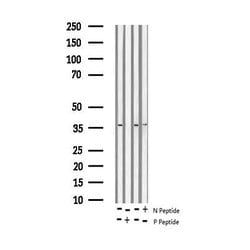
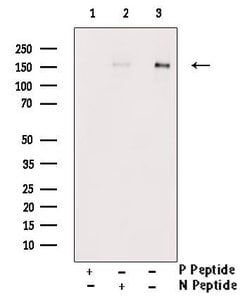
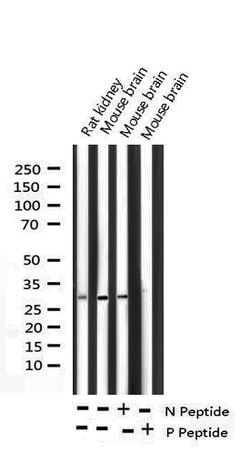
Description
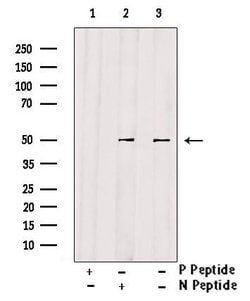
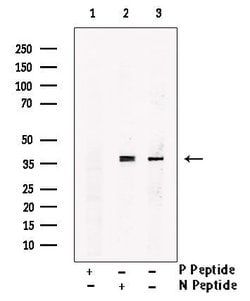
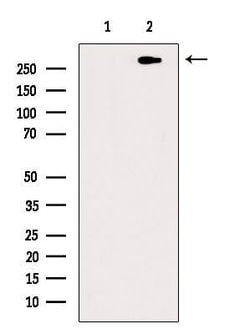
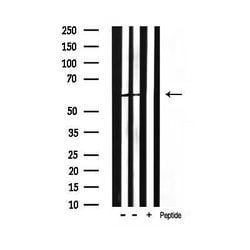
- Antibody detects endogenous levels of PDCD4 only when phosphorylated at Serine 457
- Apoptosis, also known as programmed cell death, plays major roles in development and normal tissue turnover in addition to tumor formation
- During this process, the expression patterns of numerous genes are radically altered
- One such gene is the programmed cell death protein 4 (PDCD4), whose expression was found to be upregulated in all cell lines following the onset of apoptosis
- PDCD4 encodes a tumor suppressor protein whose expression is lost in carcinomas of breast, colon, lung and prostate
- It can bind to and inhibit the helicase activity of the eukaryotic translation initiation factor 4A and inhibit the transactivation and transformation mediated by the transcription factor AP-1
- The kinase Akt regulates PDCD4 by phosphorylation, decreasing the ability of PDCD4 to interfere with the transactivation of AP-1-responsive promoter by c-Jun
- There are two known isoforms of PDCD4.