Phospho-TSC1 (Ser505) Polyclonal Antibody, Invitrogen™
Manufacturer: Thermo Scientific
Select a Size
| Pack Size | SKU | Availability | Price |
|---|---|---|---|
| Each of 1 | PIPA5105060-Each-of-1 | In Stock | ₹ 45,345.50 |
PIPA5105060 - Each of 1
In Stock
Quantity
1
Base Price: ₹ 45,345.50
GST (18%): ₹ 8,162.19
Total Price: ₹ 53,507.69
Antigen
Phospho-TSC1 (Ser505)
Classification
Polyclonal
Conjugate
Unconjugated
Gene
TSC1
Gene Alias
hamartin; HGNC:12362; Kiaa0243; LAM; MGC86987; OTTHUMP00000022439; OTTHUMP00000198378; TSC; Tsc1; tuberous sclerosis 1; tuberous sclerosis 1 protein; Tuberous sclerosis 1 protein homolog; tumor suppressor
Host Species
Rabbit
Purification Method
sequential chromatography
Regulatory Status
RUO
Gene ID (Entrez)
60445, 64930, 7248
Content And Storage
-20°C
Form
Liquid
Applications
Immunohistochemistry (Paraffin), Western Blot
Concentration
1 mg/mL
Formulation
PBS with 50% glycerol and 0.02% sodium azide; pH 7.4
Gene Accession No.
Q92574, Q9EP53, Q9Z136
Gene Symbols
TSC1
Immunogen
A synthesized peptide derived from human TSC1(Accession Q92574), corresponding to amino acid residues around phosphorylated Ser505.
Quantity
100 μL
Primary or Secondary
Primary
Target Species
Human, Mouse, Rat
Product Type
Antibody
Isotype
IgG
Related Products
Description
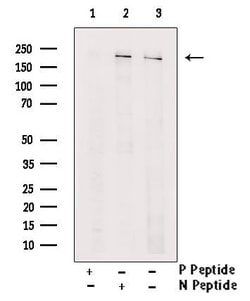
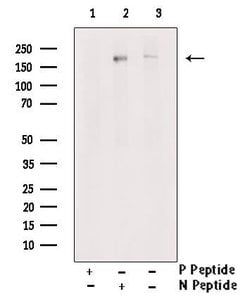
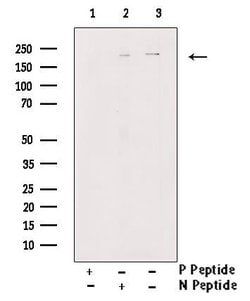
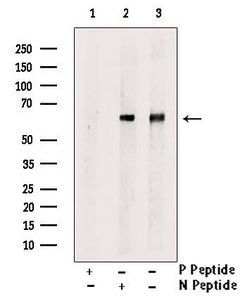
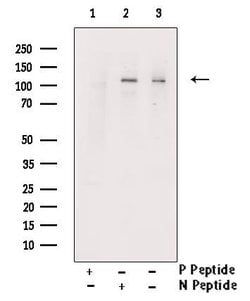
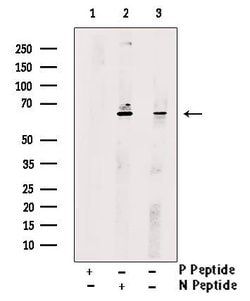
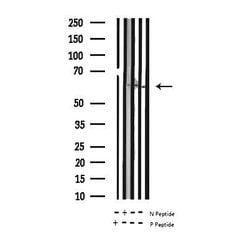
- Antibody detects endogenous levels of TSC1 only when phosphorylated at Ser505
- Tuberous sclerosis complex (TSC) is an autosomal dominant tumor syndrome caused by mutations in either of the TSC1 or TSC2 tumor suppressor genes
- The products of these genes form a protein complex that indirectly decreases the signaling of the mammalian Target of Rapamycin (TOR), an evolutionarily conserved serine/threonine kinase that regulates cell growth and cell cycle through its ability to integrate signals from nutrient levels and growth factors
- TOR activity is stimulated by Rheb, a member of the Ras superfamily of G-proteins, when the GTP/GDP ratio bound to Rheb is high
- Immunoprecipitated TSC1/TSC2 has been shown to stimulate Rheb GTPase activity in vitro, suggesting that the TSC1/TSC2 decreases the ability of Rheb to stimulate TOR activity
- This is supported by experiments showing overexpression of TSC1 and TSC2 results in a significant decrease in the GTP/GDP ratio bound to Rheb and the inhibition of cell growth
- A shorter 40 kDa isoform of TSC1 has been shown to exist but its function is unknown.