ROS1 Polyclonal Antibody, Invitrogen™
Manufacturer: Thermo Scientific
Select a Size
| Pack Size | SKU | Availability | Price |
|---|---|---|---|
| Each of 1 | PIPA5106255-Each-of-1 | In Stock | ₹ 46,502.50 |
PIPA5106255 - Each of 1
In Stock
Quantity
1
Base Price: ₹ 46,502.50
GST (18%): ₹ 8,370.45
Total Price: ₹ 54,872.95
Antigen
ROS1
Classification
Polyclonal
Conjugate
Unconjugated
Gene
ROS1
Gene Alias
c-ros; c-ros oncogene 1 , receptor tyrosine kinase; c-Ros receptor tyrosine kinase; c-ros-1; heart - derived c - ros - 1 proto - oncogene; MCF3; Proto-oncogene c-Ros; proto-oncogene c-Ros-1; Proto-oncogene tyrosine-protein kinase ROS; receptor tyrosine kinase c-ros oncogene 1; ROS; ROS proto-oncogene 1 , receptor tyrosine kinase; ROS proto-oncogene 1, receptor tyrosine kinase; Ros1; Ros-1; Ros1 proto-oncogene; ROS1C; RP1-179P9.1; transmembrane tyrosine-specific protein kinase; v-ros avian UR2 sarcoma virus oncogene homolog 1; v-ros UR2 sarcoma virus oncogene homolog 1
Host Species
Rabbit
Purification Method
Affinity chromatography
Regulatory Status
RUO
Gene ID (Entrez)
25346, 6098
Content And Storage
-20°C
Form
Liquid
Applications
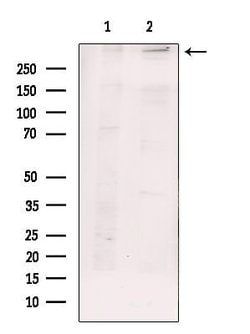
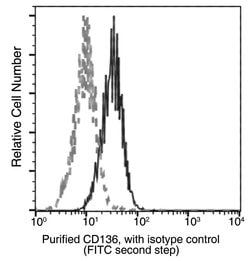
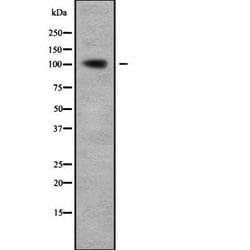
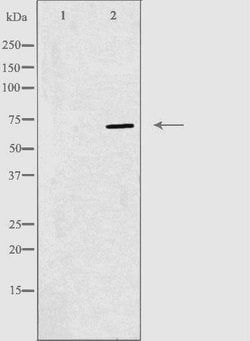
Western Blot
Concentration
1 mg/mL
Formulation
PBS with 50% glycerol and 0.02% sodium azide; pH 7.4
Gene Accession No.
P08922, Q63132
Gene Symbols
ROS1
Immunogen
A synthesized peptide derived from human ROS1(Accession P08922), corresponding to amino acid residues D2249-S2299.
Quantity
100 μL
Primary or Secondary
Primary
Target Species
Human, Rat
Product Type
Antibody
Isotype
IgG
Related Products



Description
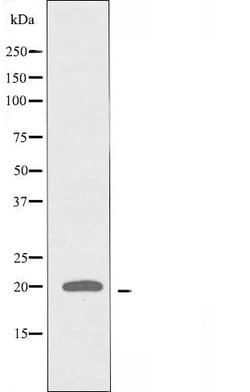
- Antibody detects endogenous levels of total ROS
- ROS1 is a tyrosine kinase that functions as a growth or differentiation factor receptor
- Protein kinases are enzymes that transfer a phosphate group from a phosphate donor, generally the g phosphate of ATP, onto an acceptor amino acid in a substrate protein
- By this basic mechanism, protein kinases mediate most of the signal transduction in eukaryotic cells, regulating cellular metabolism, transcription, cell cycle progression, cytoskeletal rearrangement and cell movement, apoptosis, and differentiation
- With more than 500 gene products, the protein kinase family is one of the largest families of proteins in eukaryotes
- The family has been classified in 8 major groups based on sequence comparison of their tyrosine (PTK) or serine/threonine (STK) kinase catalytic domains
- The tyrosine kinase (TK) group is mainly involved in the regulation of cell-cell interactions such as differentiation, adhesion, motility and death
- There are currently about 90 TK genes sequenced, 58 are of receptor protein TK (e.g
- EGFR, EPH, FGFR, PDGFR, TRK, and VEGFR families), and 32 of cytosolic TK (e.g
- ABL, FAK, JAK, and SRC families).