ABCB9 Polyclonal Antibody, Invitrogen™
Manufacturer: Thermo Scientific
Select a Size
| Pack Size | SKU | Availability | Price |
|---|---|---|---|
| Each of 1 | PIPA5111051-Each-of-1 | In Stock | ₹ 48,905.50 |
PIPA5111051 - Each of 1
In Stock
Quantity
1
Base Price: ₹ 48,905.50
GST (18%): ₹ 8,802.99
Total Price: ₹ 57,708.49
Antigen
ABCB9
Classification
Polyclonal
Formulation
PBS with 40% glycerol and 0.02% sodium azide; pH 7.2
Gene Accession No.
Q9NP78
Gene Symbols
ABCB9
Immunogen
Recombinant Protein corresonding to Human ABCB9
Quantity
100 μL
Primary or Secondary
Primary
Target Species
Human
Product Type
Antibody
Isotype
IgG
Applications
Immunohistochemistry
Conjugate
Unconjugated
Gene
ABCB9
Gene Alias
ABC transporter 9 protein; ABCB9; ATP binding cassette subfamily B member 9; ATP-binding cassette sub-family B member 9; ATP-binding cassette transporter 9; ATP-binding cassette, subfamily B (MDR/TAP), member 9; ATP-binding cassette, sub-family B (MDR/TAP), member 9; ATP-binding cassette, sub-family B, member 9; EST122234; KIAA1520; LOW QUALITY PROTEIN: ATP-binding cassette sub-family B member 9; mABCB9; mKIAA1520; TAPL; TAP-like ABC transporter; TAP-like protein
Host Species
Rabbit
Purification Method
Antigen affinity chromatography
Regulatory Status
RUO
Gene ID (Entrez)
23457
Content And Storage
Store at 4°C short term. For long term storage, store at -20°C, avoiding freeze/thaw cycles.
Form
Liquid
Related Products
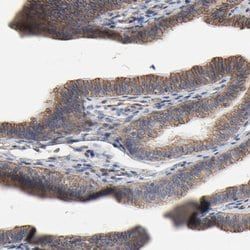
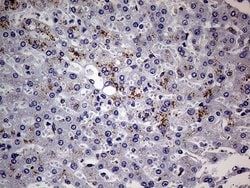
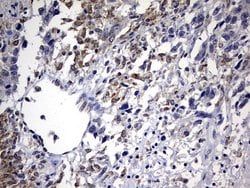
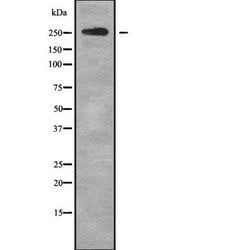


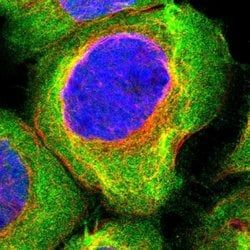

Description
- Immunogen sequence: ESVGSVYSGL MQGVGAAEKV FEFIDRQPTM VHDGSLAPDH LEGRVDFENV TFTYRTRPHT QVLQNVSFSL S The structure specific ERCC 1 / XPF endonuclease complex is implicated in the repair of two distinct types of lesions in DNA: NER for UV induced lesions and bulky chemical adducts; and recombination repair of the very genotoxic interstrand cross links
- NER mechanism involves dual incisions on both sides of the damage catalyzed by two nucleases
- In mammalian cells, XPG cleaves 3' of the DNA lesion while the ERCC1 / XPF complex makes the 5' incision
- ERCC1 / XPF probably plays a role in processing partially processed recombination intermediates.