PIPA5114690
H2A.Zac pan-acetyl (K4,K7,K11,K13) Polyclonal Antibody, Invitrogen™
Manufacturer: Thermo Scientific
Select a Size
| Pack Size | SKU | Availability | Price |
|---|---|---|---|
| Each of 1 | PIPA5114690-Each-of-1 | In Stock | ₹ 46,502.50 |
PIPA5114690 - Each of 1
In Stock
Quantity
1
Base Price: ₹ 46,502.50
GST (18%): ₹ 8,370.45
Total Price: ₹ 54,872.95
Antigen
H2A.Zac pan-acetyl (K4,K7,K11,K13)
Classification
Polyclonal
Conjugate
Unconjugated
Gene
H2AFZ
Gene Alias
H2A histone family member Z; H2A histone family, member Z; H2A.z; H2a.z-1; H2A/z; H2AFZ; H2az; H2AZ histone; histone H2A.Z
Host Species
Rabbit
Purification Method
Affinity chromatography
Regulatory Status
RUO
Gene ID (Entrez)
3015
Content And Storage
-20°C
Form
Liquid
Applications
Immunohistochemistry (Paraffin), Western Blot
Concentration
1 mg/mL
Formulation
PBS with 50% glycerol and 0.02% sodium azide
Gene Accession No.
P0C0S5
Gene Symbols
H2AFZ
Immunogen
A synthesized peptide derived from human H2AFZ(Accession P0C0S5), corresponding to amino acid residues M1-S21.
Quantity
100 μL
Primary or Secondary
Primary
Target Species
Human, Mouse, Rat
Product Type
Antibody
Isotype
IgG
Related Products
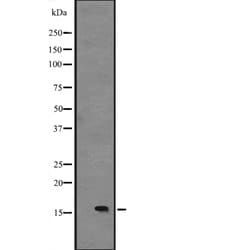
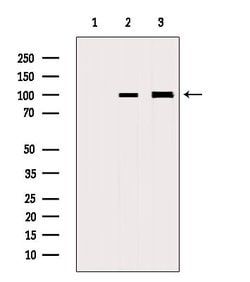
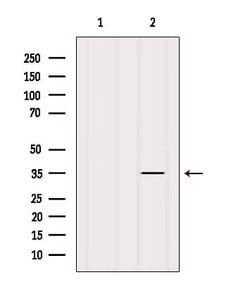
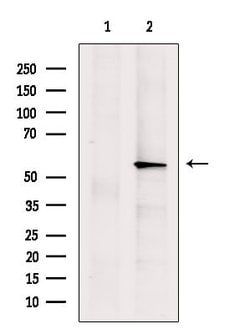
Description
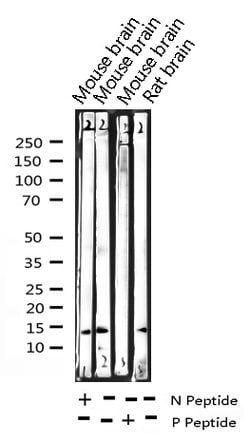
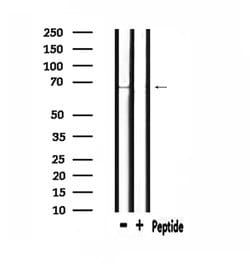
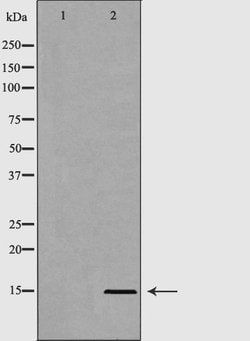
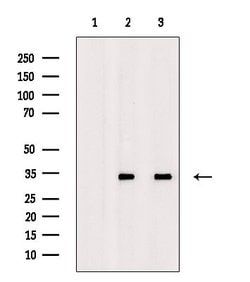
- Antibody detects endogenous levels of Acetyl-H2A.Z only when acetylated at Lys4/7/11/13
- H2A.Zac pan-acetyl (K4,K7,K11,K13) is classified under histone H2A which replaces conventional H2A in a subset of nucleosomes
- Nucleosomes wrap and compact DNA into chromatin, limiting DNA accessibility to the cellular machineries which require DNA as a template
- Histones thereby play a central role in transcription regulation, DNA repair, DNA replication and chromosomal stability
- DNA accessibility is regulated via a complex set of post-translational modifications of histones, also called histone code, and nucleosome remodeling
- May be involved in the formation of constitutive heterochromatin
- May be required for chromosome segregation during cell division.