CIRBP Polyclonal Antibody, Invitrogen™
Manufacturer: Thermo Scientific
Select a Size
| Pack Size | SKU | Availability | Price |
|---|---|---|---|
| Each of 1 | PIPA5114718-Each-of-1 | In Stock | ₹ 46,502.50 |
PIPA5114718 - Each of 1
In Stock
Quantity
1
Base Price: ₹ 46,502.50
GST (18%): ₹ 8,370.45
Total Price: ₹ 54,872.95
Antigen
CIRBP
Classification
Polyclonal
Conjugate
Unconjugated
Gene
CIRBP
Gene Alias
A18 hnRNP; A18HNRNP; CIRBP; CIRP; cold inducible RNA binding protein; cold inducible RNA-binding protein; cold-inducible RNA-binding protein; glycine-rich RNA binding protein; glycine-rich RNA-binding protein CIRP; R74941; testicular tissue protein Li 39
Host Species
Rabbit
Purification Method
Affinity chromatography
Regulatory Status
RUO
Gene ID (Entrez)
1153, 12696, 81825
Content And Storage
-20°C
Form
Liquid
Applications
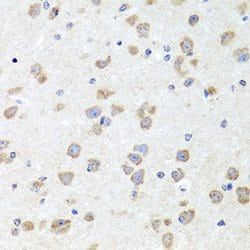
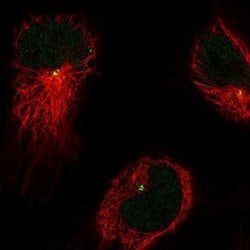
Immunocytochemistry, Immunohistochemistry (Paraffin), Western Blot
Concentration
1 mg/mL
Formulation
PBS with 50% glycerol and 0.02% sodium azide
Gene Accession No.
P60824, P60825, Q14011
Gene Symbols
CIRBP
Immunogen
A synthesized peptide derived from human CIRBP(Accession Q14011), corresponding to amino acid residues Y141-E172.
Quantity
100 μL
Primary or Secondary
Primary
Target Species
Human, Mouse, Rat
Product Type
Antibody
Isotype
IgG
Related Products


Description
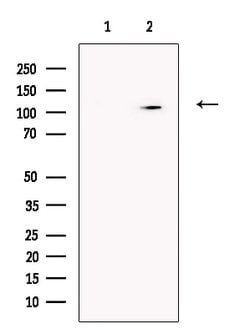
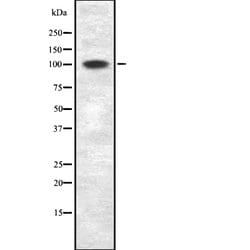
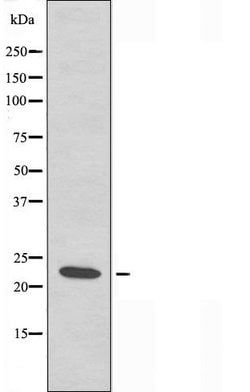
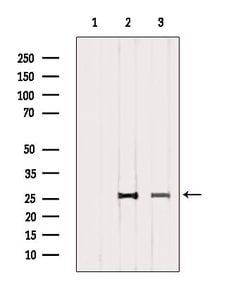
- Antibody detects endogenous levels of total CIRBP
- CIRBP is cold-inducible mRNA binding protein that plays a protective role in the genotoxic stress response by stabilizing transcripts of genes involved in cell survival
- It acts as a translational activator and seems to play an essential role in cold-induced suppression of cell proliferation
- It binds specifically to the 3'-untranslated regions (3'-UTRs) of stress-responsive transcripts RPA2 and TXN
- This protein acts as a translational repressor and promotes assembly of stress granules (SGs), when overexpressed.