SSDD/Steroid sulfatase Polyclonal Antibody, Invitrogen™
Manufacturer: Thermo Scientific
Select a Size
| Pack Size | SKU | Availability | Price |
|---|---|---|---|
| Each of 1 | PIPA5117295-Each-of-1 | In Stock | ₹ 46,502.50 |
PIPA5117295 - Each of 1
In Stock
Quantity
1
Base Price: ₹ 46,502.50
GST (18%): ₹ 8,370.45
Total Price: ₹ 54,872.95
Antigen
SSDD/Steroid sulfatase
Classification
Polyclonal
Conjugate
Unconjugated
Gene
Sts
Gene Alias
ArsC; ARSC1; Arylsulfatase C; ASC; ES; Estrone sulfatase; LOC402795 protein; LOW QUALITY PROTEIN: steryl-sulfatase; steryl-sulfatase; si:ch211-271l9.1; SSDD; Steroid sulfatase; steroid sulfatase (microsomal), arylsulfatase C, isozyme S; steroid sulfatase (microsomal), isozyme S; steroid sulphatase; steryl-sulfatase; Steryl-sulfate sulfohydrolase; STS; XLI
Host Species
Rabbit
Purification Method
Antigen affinity chromatography
Regulatory Status
RUO
Gene ID (Entrez)
412
Content And Storage
-20° C, Avoid Freeze/Thaw Cycles
Form
Liquid
Applications
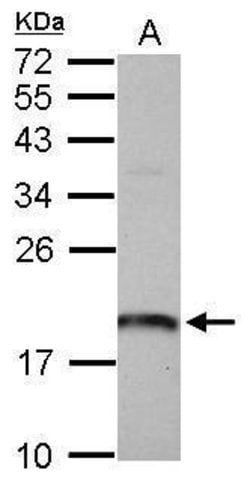
Western Blot
Concentration
1 mg/mL
Formulation
PBS with 20% glycerol and 0.01% thimerosal; pH 7
Gene Accession No.
P08842
Gene Symbols
Sts
Immunogen
Recombinant protein encompassing a sequence within the center region of human Steroid sulfatase. The exact sequence is proprietary.
Quantity
100 μL
Primary or Secondary
Primary
Target Species
Human
Product Type
Antibody
Isotype
IgG
Related Products
Description
- Centrifuge briefly prior to opening
- The protein encoded by this gene catalyzes the conversion of sulfated steroid precursors to estrogens during pregnancy
- The encoded protein is found in the endoplasmic reticulum, where it acts as a homodimer
- Mutations in this gene are known to cause X-linked ichthyosis (XLI).