PYGM Polyclonal Antibody, Invitrogen™
Manufacturer: Thermo Scientific
Select a Size
| Pack Size | SKU | Availability | Price |
|---|---|---|---|
| Each of 1 | PIPA5121653-Each-of-1 | In Stock | ₹ 14,756.20 |
PIPA5121653 - Each of 1
In Stock
Quantity
1
Base Price: ₹ 14,756.20
GST (18%): ₹ 2,656.116
Total Price: ₹ 17,412.316
Antigen
PYGM
Classification
Polyclonal
Conjugate
Unconjugated
Gene
PYGM
Gene Alias
AI115133; glycogen muscle; glycogen phosphorylase; glycogen phosphorylase, muscle associated; glycogen phosphorylase, muscle form; GPMM; muscle (McArdle syndrome); muscle glycogen phosphorylase; Muscpho; Myophosphorylase; PG; Phosphorylase glycogen; phosphorylase, glycogen, muscle; Phosphorylase, glycogen; muscle (McArdle syndrome); Pygm; unnamed protein product
Host Species
Rabbit
Purification Method
Antigen affinity chromatography
Regulatory Status
RUO
Gene ID (Entrez)
19309
Content And Storage
-20°C
Form
Liquid
Applications
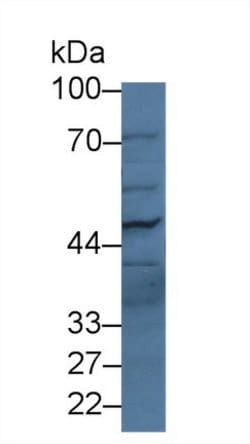
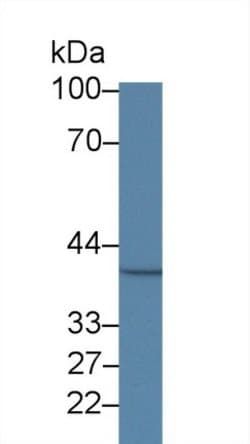
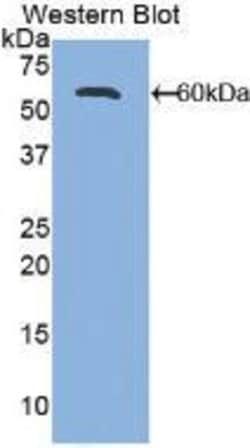
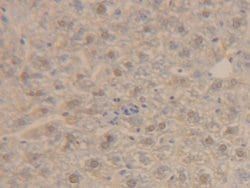
Immunocytochemistry, Immunohistochemistry (Paraffin), Western Blot
Concentration
1 mg/mL
Formulation
PBS with 50% glycerol and 0.05% ProClin 300
Gene Accession No.
Q9WUB3
Gene Symbols
PYGM
Immunogen
Recombinant protein Glycogen Phosphorylase, Muscle. The antigen corresponds to amino acid range 11-187 of the target protein.
Quantity
20 μL
Primary or Secondary
Primary
Target Species
Mouse
Product Type
Antibody
Isotype
IgG
Related Products
Description
- This gene encodes a muscle enzyme involved in glycogenolysis
- Highly similar enzymes encoded by different genes are found in liver and brain
- Mutations in this gene are associated with McArdle disease (myophosphorylase deficiency), a glycogen storage disease of muscle
- Alternative splicing results in multiple transcript variants.