CD166 (ALCAM) Polyclonal Antibody, Invitrogen™
Manufacturer: Thermo Scientific
Select a Size
| Pack Size | SKU | Availability | Price |
|---|---|---|---|
| Each of 1 | PIPA5122131-Each-of-1 | In Stock | ₹ 14,756.20 |
PIPA5122131 - Each of 1
In Stock
Quantity
1
Base Price: ₹ 14,756.20
GST (18%): ₹ 2,656.116
Total Price: ₹ 17,412.316
Antigen
CD166 (ALCAM)
Classification
Polyclonal
Conjugate
Unconjugated
Gene
ALCAM
Gene Alias
activated leukocyte cell adhesion molecule; AI853494; ALCAM; BEN; CD166; CD166 antigen; cell adhesion molecule; DM-GRASP; FLJ38514; HB2; KG-CAM; MEMD; MGC71733; MuSC; Protein DM-GRASP; Protein MEMD; SB-10 antigen; SC1; unnamed protein product
Host Species
Rabbit
Purification Method
Antigen affinity chromatography
Regulatory Status
RUO
Gene ID (Entrez)
11658
Content And Storage
-20°C
Form
Liquid
Applications
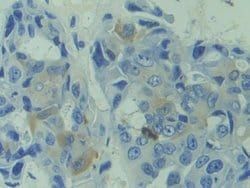
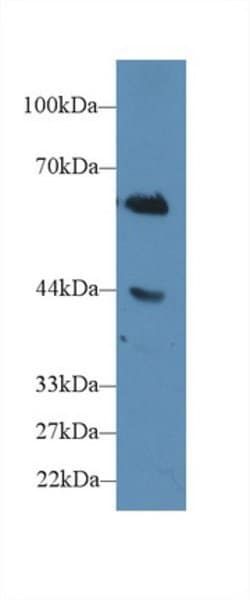
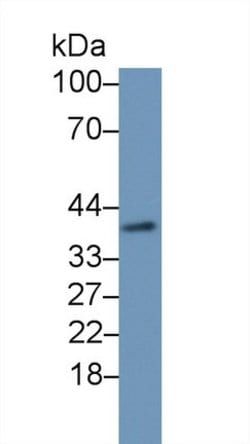
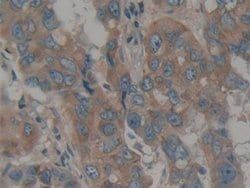
Immunocytochemistry, Immunohistochemistry (Paraffin), Western Blot
Concentration
0.92 mg/mL
Formulation
PBS with 50% glycerol and 0.05% ProClin 300
Gene Accession No.
Q61490
Gene Symbols
ALCAM
Immunogen
Recombinant protein Activated Leukocyte Cell Adhesion Molecule. The antigen corresponds to amino acid range 28-527 of the target protein.
Quantity
20 μL
Primary or Secondary
Primary
Target Species
Mouse
Product Type
Antibody
Isotype
IgG
Related Products
Description
- This gene encodes activated leukocyte cell adhesion molecule (ALCAM), also known as CD166 (cluster of differentiation 166), which is a member of a subfamily of immunoglobulin receptors with five immunoglobulin-like domains (VVC2C2C2) in the extracellular domain
- This protein binds to T-cell differentiation antigene CD6, and is implicated in the processes of cell adhesion and migration
- Multiple alternatively spliced transcript variants encoding different isoforms have been found.