GPX4 Polyclonal Antibody, Invitrogen™
Manufacturer: Thermo Scientific
Select a Size
| Pack Size | SKU | Availability | Price |
|---|---|---|---|
| Each of 1 | PIPA5121951-Each-of-1 | In Stock | ₹ 17,346.10 |
PIPA5121951 - Each of 1
In Stock
Quantity
1
Base Price: ₹ 17,346.10
GST (18%): ₹ 3,122.298
Total Price: ₹ 20,468.398
Antigen
GPX4
Classification
Polyclonal
Conjugate
Unconjugated
Gene
GPX4
Gene Alias
glutathione peroxidase 4; GP-GPx4; Gpx4; gpx-4; GSHPx-4; HGNC:4556; MCSP; mtPHGPx; Phgpx; phospholipid hydroperoxidase; phospholipid hydroperoxide glutathione peroxidase; phospholipid hydroperoxide glutathione peroxidase, mitochondrial; phospholipid hydroperoxide glutathione peroxidase, nuclear; SMDS; snGPx; snPHGPx; sperm nuclei glutathione peroxidase; sperm nucleus glutathione peroxidase
Host Species
Rabbit
Purification Method
Antigen affinity chromatography
Regulatory Status
RUO
Gene ID (Entrez)
2879
Content And Storage
-20°C
Form
Liquid
Applications
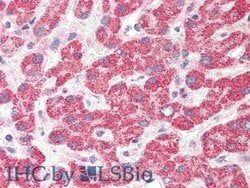
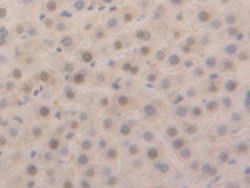
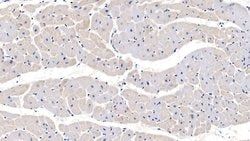
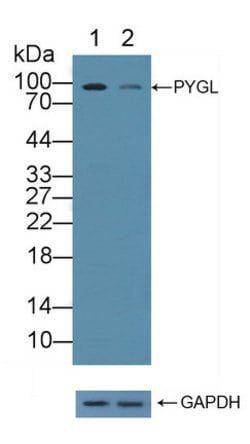
Immunohistochemistry (Paraffin), Western Blot
Concentration
0.5 mg/mL
Formulation
PBS with 50% glycerol and 0.05% ProClin 300
Gene Accession No.
P36969
Gene Symbols
GPX4
Immunogen
Recombinant protein Glutathione Peroxidase 4. The antigen corresponds to amino acid range 74-197 of the target protein.
Quantity
20 μL
Primary or Secondary
Primary
Target Species
Human
Product Type
Antibody
Isotype
IgG
Related Products
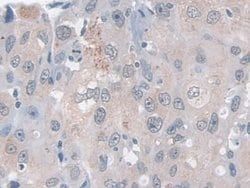
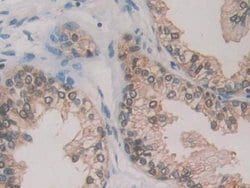
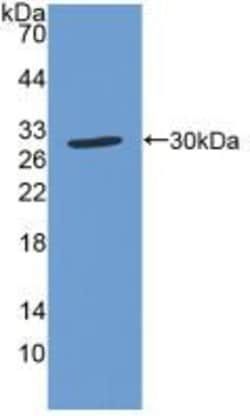
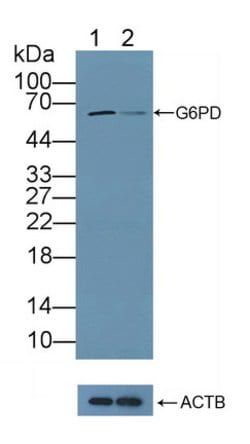
Description
- Glutathione peroxidase catalyzes the reduction of hydrogen peroxide, organic hydroperoxide, and lipid peroxides by reduced glutathione and functions in the protection of cells against oxidative damage
- Human plasma glutathione peroxidase has been shown to be a selenium-containing enzyme and the UGA codon is translated into a selenocysteine
- Through alternative splicing and transcription initiation, rat produces proteins that localize to the nucleus, mitochondrion, and cytoplasm
- In humans, experimental evidence for alternative splicing exists; alternative transcription initiation and the cleavage sites of the mitochondrial and nuclear transit peptides need to be experimentally verified.