ATR Polyclonal Antibody, Invitrogen™
Manufacturer: Thermo Scientific
Select a Size
| Pack Size | SKU | Availability | Price |
|---|---|---|---|
| Each of 1 | PIPA517265-Each-of-1 | In Stock | ₹ 44,633.50 |
PIPA517265 - Each of 1
In Stock
Quantity
1
Base Price: ₹ 44,633.50
GST (18%): ₹ 8,034.03
Total Price: ₹ 52,667.53
Antigen
ATR
Classification
Polyclonal
Conjugate
Unconjugated
Gene
ATR
Gene Alias
2310008J16Rik; 2810405N18Rik; ataxia telangiectasia and Rad3 related; ataxia telangiectasia and Rad3-related protein; ATR; ATR serine/threonine kinase; EC 2.7.11.1; FCTCS; FRAP-related protein 1; FRAP-related protein-1; FRP1; I79_000761; kinase ATR; MEC1; MEC1, mitosis entry checkpoint 1, homolog; protein kinase ATR; SCKL; SCKL1; Serine/threonine-protein kinase ATR; TEM8
Host Species
Rabbit
Purification Method
Antigen affinity chromatography
Regulatory Status
RUO
Gene ID (Entrez)
545
Content And Storage
-20°C
Form
Liquid
Applications
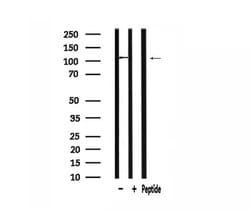
Western Blot
Concentration
14 μg/mL
Formulation
0.01M HEPES with 0.15M NaCl, 100μg/mL BSA, 50% glycerol and no preservative; pH 7.5
Gene Accession No.
Q13535
Gene Symbols
ATR
Immunogen
Synthetic peptide corresponding to central residues of human ATR
Quantity
100 μL
Primary or Secondary
Primary
Target Species
Human, Non-human Primate
Product Type
Antibody
Isotype
IgG
Related Products

Description
- It is not recommended to aliquot this antibody
- The protein encoded by this gene is a serine/threonine kinase and DNA damage sensor, activating cell cycle checkpoint signaling upon DNA stress
- The encoded protein can phosphorylate and activate several proteins involved in the inhibition of DNA replication and mitosis, and can promote DNA repair, recombination, and apoptosis
- This protein is also important for fragile site stability and centrosome duplication
- Defects in this gene are a cause of Seckel syndrome 1.