TOCA-1 Polyclonal Antibody, Invitrogen™
Manufacturer: Thermo Scientific
Select a Size
| Pack Size | SKU | Availability | Price |
|---|---|---|---|
| Each of 1 | PIPA520445-Each-of-1 | In Stock | ₹ 46,502.50 |
PIPA520445 - Each of 1
In Stock
Quantity
1
Base Price: ₹ 46,502.50
GST (18%): ₹ 8,370.45
Total Price: ₹ 54,872.95
Antigen
TOCA-1
Classification
Polyclonal
Conjugate
Unconjugated
Gene
FNBP1L
Gene Alias
2610318I01Rik; AW548221; C1orf39; Cdc42 effector; FNBP1L; formin binding protein 1 like; formin binding protein 1-like; formin-binding protein 1-like; RGD1305386; TOCA1; Toca-1; transducer of Cdc42-dependent actin assembly 1; transducer of Cdc42-dependent actin assembly protein 1
Host Species
Rabbit
Purification Method
Antigen affinity chromatography
Regulatory Status
RUO
Gene ID (Entrez)
214459, 310839, 54874
Content And Storage
Maintain refrigerated at 2-8°C for up to 3 months. For long term storage store at -20°C
Form
Liquid
Applications
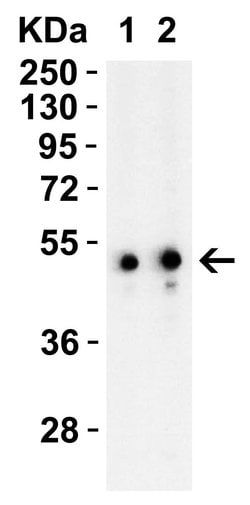
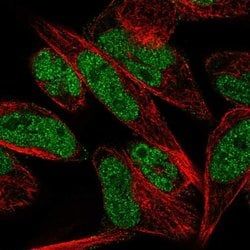
Immunohistochemistry, Western Blot
Concentration
1 mg/mL
Formulation
PBS with 0.02% sodium azide
Gene Accession No.
Q2HWF0, Q5T0N5, Q8K012
Gene Symbols
FNBP1L
Immunogen
A 15 amino acid peptide near the amino terminus of the human TOCA-1.
Quantity
100 μg
Primary or Secondary
Primary
Target Species
Human, Mouse, Rat
Product Type
Antibody
Isotype
IgG
Related Products

Description
- A suggested positive control is human brain tissue lysate
- PA5-20445 can be used with blocking peptide PEP-0562
- The protein encoded by this gene contains a RING finger motif
- The mouse counterpart of this protein has been shown to interact with Rela, the p65 subunit of NF-kappaB (NFKB), and modulate NFKB-mediated transcription activity
- The mouse protein also binds ubiquitin-conjugating enzymes (E2s) and is a substrate for E2-dependent ubiquitination.