PIPA525594
Calcitonin Receptor Polyclonal Antibody, Invitrogen™
Manufacturer: Thermo Scientific
Select a Size
| Pack Size | SKU | Availability | Price |
|---|---|---|---|
| Each of 1 | PIPA525594-Each-of-1 | In Stock | ₹ 49,172.50 |
PIPA525594 - Each of 1
In Stock
Quantity
1
Base Price: ₹ 49,172.50
GST (18%): ₹ 8,851.05
Total Price: ₹ 58,023.55
Antigen
Calcitonin Receptor
Classification
Polyclonal
Conjugate
Unconjugated
Gene
CALCR
Gene Alias
C1A/C1B; calcitonin receptor; CALCR; Clr; COPT1; CRT; CT receptor; CTR; CT-R; CTR1; hCTR1
Host Species
Rabbit
Purification Method
Antigen affinity chromatography, Protein A
Regulatory Status
RUO
Gene ID (Entrez)
799
Content And Storage
-20° C, Avoid Freeze/Thaw Cycles
Form
Liquid
Applications
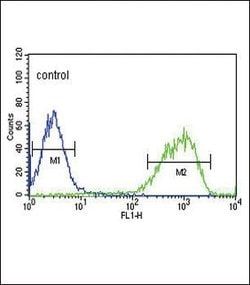
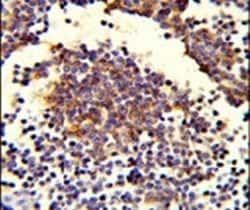
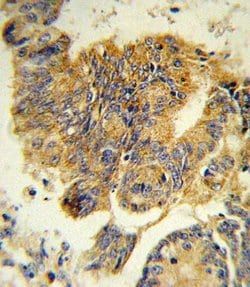
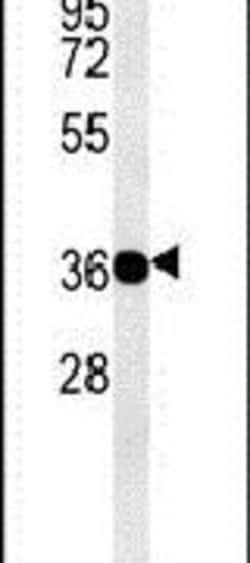
Flow Cytometry, Immunocytochemistry, Western Blot
Concentration
2 mg/mL
Formulation
PBS with 0.09% sodium azide
Gene Accession No.
P30988
Gene Symbols
CALCR
Immunogen
KLH conjugated synthetic peptide between 445-474 amino acids from the C-terminal region of human CALCR
Quantity
400 μL
Primary or Secondary
Primary
Target Species
Human
Product Type
Antibody
Isotype
IgG
Related Products
Description
- The Calcitonin Receptor inhibits bone resorption
- This receptor is expressed during development and is involved in morphogenesis
- Three alternatively spliced Calcitonin Receptor isoforms have been identified
- In addition to binding calcitonin, the Calcitonin Receptor can complex with RAMP3 (receptor activity modifying protein) to bind amylin, which regulates pancreatic islet function and is involved in Type II diabetes
- The Calcitonin Receptor has been reported in artery, blood, bone, brain, kidney, lung, placenta, prostate, skeletal muscle, and thyroid
- ESTs have been isolated from bone, embryo, kidney, and melanocyte/uterus/fetal heart libraries.