PIPA526250
Fibromodulin Polyclonal Antibody, Invitrogen™
Manufacturer: Thermo Scientific
Select a Size
| Pack Size | SKU | Availability | Price |
|---|---|---|---|
| Each of 1 | PIPA526250-Each-of-1 | In Stock | ₹ 48,994.50 |
PIPA526250 - Each of 1
In Stock
Quantity
1
Base Price: ₹ 48,994.50
GST (18%): ₹ 8,819.01
Total Price: ₹ 57,813.51
Antigen
Fibromodulin
Classification
Polyclonal
Conjugate
Unconjugated
Gene
FMOD
Gene Alias
AI131919; AU041740; Collagen-binding 59 kDa protein; fibromodulin; FM; FMOD; Keratan sulfate proteoglycan fibromodulin; KSPG fibromodulin; SLRR2E
Host Species
Rabbit
Purification Method
Antigen affinity chromatography, Protein A
Regulatory Status
RUO
Gene ID (Entrez)
14264, 2331
Content And Storage
-20° C, Avoid Freeze/Thaw Cycles
Form
Liquid
Applications
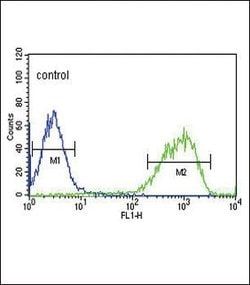
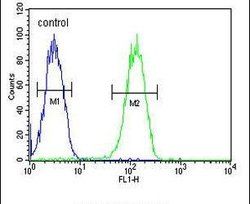
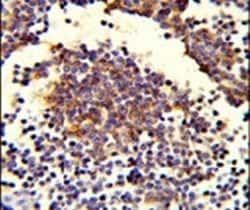
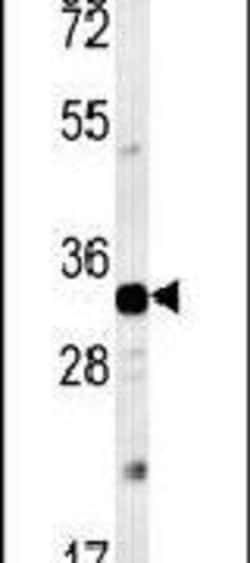
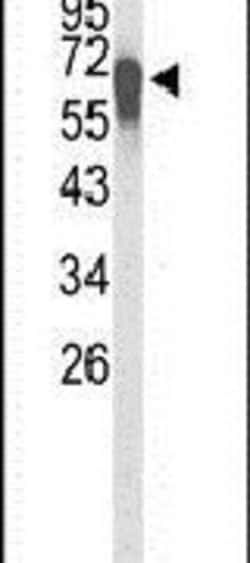
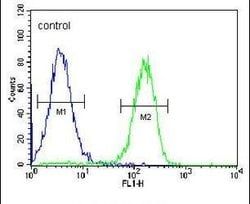
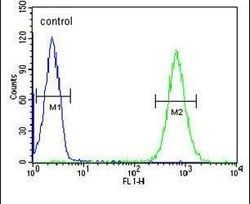
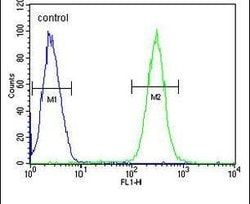
Flow Cytometry, Immunohistochemistry (Paraffin), Western Blot
Concentration
0.5 mg/mL
Formulation
PBS with 0.09% sodium azide
Gene Accession No.
P50608, Q06828
Gene Symbols
FMOD
Immunogen
KLH conjugated synthetic peptide between 337-364 amino acids from the C-terminal region of human FMOD
Quantity
400 μL
Primary or Secondary
Primary
Target Species
Human, Mouse
Product Type
Antibody
Isotype
Ig
Related Products
Description
- This antibody is predicted to react with bovine based on sequence homology
- Fibromodulin is a member of a family of small interstitial proteoglycans, containing a central region composed of leucine-rich repeats with 4 keratan sulfate chains flanked by disulfide-bonded terminal domains
- It may participate in the assembly of the extracellular matrix as it interacts with type I and type II collagen fibrils and inhibits fibrillogenesis in vitro
- It may also regulate TGF-beta activities by sequestering TGF-beta into the extracellular matrix.