FGF10 Polyclonal Antibody, Invitrogen™
Manufacturer: Thermo Scientific
Select a Size
| Pack Size | SKU | Availability | Price |
|---|---|---|---|
| Each of 1 | PIPA527300-Each-of-1 | In Stock | ₹ 47,570.50 |
PIPA527300 - Each of 1
In Stock
Quantity
1
Base Price: ₹ 47,570.50
GST (18%): ₹ 8,562.69
Total Price: ₹ 56,133.19
Antigen
FGF10
Classification
Polyclonal
Conjugate
Unconjugated
Gene
FGF10
Gene Alias
AEY17; BB213776; FGF; Fgf10; FGF-10; Fibroblast growth factor; Fibroblast growth factor 10; Gsfaey17; Keratinocyte growth factor 2; produced by fibroblasts of urinary bladder lamina propria
Host Species
Rabbit
Purification Method
Antigen affinity chromatography
Regulatory Status
RUO
Gene ID (Entrez)
2255, 25443
Content And Storage
Store at 4°C short term. For long term storage, store at -20°C, avoiding freeze/thaw cycles.
Form
Liquid
Applications
Western Blot
Concentration
0.31 mg/mL
Formulation
0.1M tris glycine with 10% glycerol and 0.01% thimerosal; pH 7
Gene Accession No.
O15520, P70492
Gene Symbols
FGF10
Immunogen
Recombinant protein fragment corresponding to a region within amino acids 18 and 169 of Human FGF10
Quantity
100 μL
Primary or Secondary
Primary
Target Species
Human, Rat
Product Type
Antibody
Isotype
IgG
Related Products
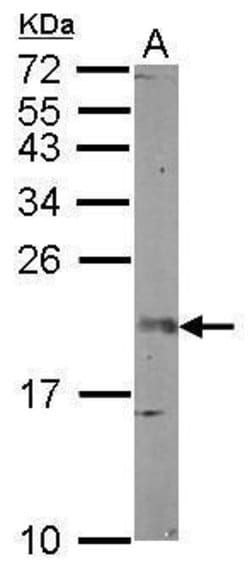
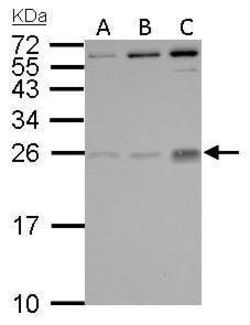
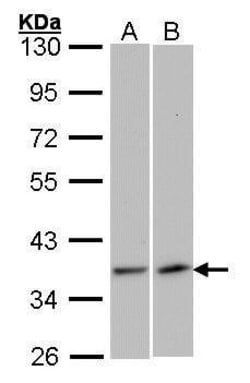

Description
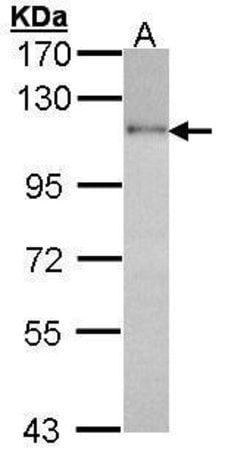
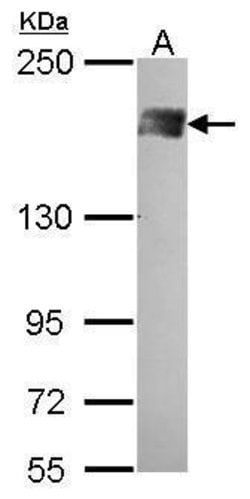
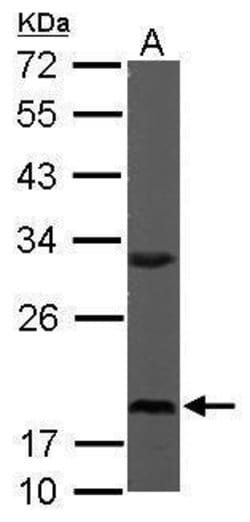
- Recommended positive controls: synovial fibroblast, HUVEC, Rat2
- Predicted reactivity: Mouse (95%), Rat (100%), Xenopus laevis (83%), Chicken (89%), Sheep (99%), Rhesus Monkey (100%), Bovine (99%)
- Store product as a concentrated solution
- Centrifuge briefly prior to opening the vial
- FGF10 is a member of the fibroblast growth factor (FGF) family
- FGF family members possess broad mitogenic and cell survival activities, and are involved in a variety of biological processes, including embryonic development, cell growth, morphogenesis, tissue repair, tumor growth and invasion
- This protein exhibits mitogenic activity for keratinizing epidermal cells, but essentially no activity for fibroblasts, which is similar to the biological activity of FGF7
- Studies of the mouse homolog of suggested that this gene is required for embryonic epidermal morphogenesis including brain development, lung morphogenesis, and initiation of lim bud formation
- This protein is also implicated to be a primary factor in the process of wound healing.