HGS Polyclonal Antibody, Invitrogen™
Manufacturer: Thermo Scientific
Select a Size
| Pack Size | SKU | Availability | Price |
|---|---|---|---|
| Each of 1 | PIPA527502-Each-of-1 | In Stock | ₹ 48,460.50 |
PIPA527502 - Each of 1
In Stock
Quantity
1
Base Price: ₹ 48,460.50
GST (18%): ₹ 8,722.89
Total Price: ₹ 57,183.39
Antigen
HGS
Classification
Polyclonal
Conjugate
Unconjugated
Gene
HGS
Gene Alias
hepatocyte growth factor-regulated tyrosine kinase substrate; HGF-regulated tyrosine kinase substrate; HGNC:4897; Hgr; Hgs; Hrs; Hrs2; human growth factor-regulated tyrosine kinase substrate; protein pp110; SNAP-25-interacting protein Hrs-2; ZFYVE8
Host Species
Rabbit
Purification Method
Antigen affinity chromatography
Regulatory Status
RUO
Gene ID (Entrez)
9146
Content And Storage
Store at 4°C short term. For long term storage, store at -20°C, avoiding freeze/thaw cycles.
Form
Liquid
Applications
Immunocytochemistry, Western Blot
Concentration
0.15 mg/mL
Formulation
PBS with 10% glycerol and 0.01% thimerosal; pH 7
Gene Accession No.
O14964
Gene Symbols
HGS
Immunogen
Recombinant fragment corresponding to a region within amino acids 78 and 365 of Human HGS
Quantity
100 μL
Primary or Secondary
Primary
Target Species
Human
Product Type
Antibody
Isotype
IgG
Related Products
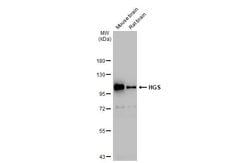

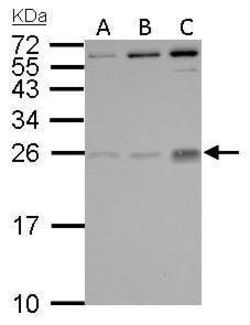
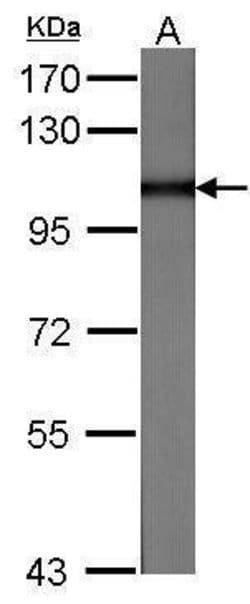
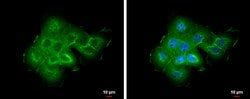
Description
- Recommended positive controls: A431, H1299, HeLa
- Predicted reactivity: Mouse (95%), Rat (95%), Zebrafish (88%), Xenopus laevis (87%), Dog (92%), Rhesus Monkey (99%), Bovine (95%)
- Store product as a concentrated solution
- Centrifuge briefly prior to opening the vial
- HGS is involved in intracellular signal transduction mediated by cytokines and growth factors
- When associated with STAM, it suppresses DNA signaling upon stimulation by IL-2 and GM-CSF
- It could be a direct effector of PI3-kinase in vesicular pathway via early endosomes and may regulate trafficking to early and late endosomes by recruiting clathrin
- HGS may concentrate ubiquitinated receptors within clathrin-coated regions
- It is involved in down-regulation of receptor tyrosine kinase via multivesicular body (MVBs) when complexed with STAM
- This complex binds ubiquitin and acts as sorting machinery that recognizes ubiquitinated receptors and transfers them to further sequential lysosomal sorting/trafficking processes
- HGS may contribute to the efficient recruitment of SMADs to the activin receptor complex.