Ceruloplasmin Polyclonal Antibody, Invitrogen™
Manufacturer: Thermo Scientific
Select a Size
| Pack Size | SKU | Availability | Price |
|---|---|---|---|
| Each of 1 | PIPA529656-Each-of-1 | In Stock | ₹ 49,350.50 |
PIPA529656 - Each of 1
In Stock
Quantity
1
Base Price: ₹ 49,350.50
GST (18%): ₹ 8,883.09
Total Price: ₹ 58,233.59
Antigen
Ceruloplasmin
Classification
Polyclonal
Conjugate
Unconjugated
Gene
CP
Gene Alias
bilitranslocase; CERP; Ceruloplasmin; ceruloplasmin (ferroxidase); CP; CP-2; D3Ertd555e; ferroxidase
Host Species
Rabbit
Purification Method
Antigen affinity chromatography
Regulatory Status
RUO
Gene ID (Entrez)
12870, 1356, 24268
Content And Storage
Store at 4°C short term. For long term storage, store at -20°C, avoiding freeze/thaw cycles.
Form
Liquid
Applications
Immunocytochemistry, Immunohistochemistry (Paraffin), Western Blot
Concentration
1 mg/mL
Formulation
0.1M tris glycine with 10% glycerol and 0.01% thimerosal; pH 7
Gene Accession No.
P00450, P13635, Q61147
Gene Symbols
CP
Immunogen
Recombinant fragment corresponding to a region within amino acids 1 and 206 of Human Ceruloplasmin
Quantity
100 μL
Primary or Secondary
Primary
Target Species
Human, Mouse, Rat
Product Type
Antibody
Isotype
IgG
Related Products
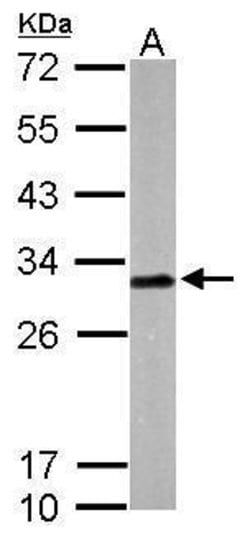

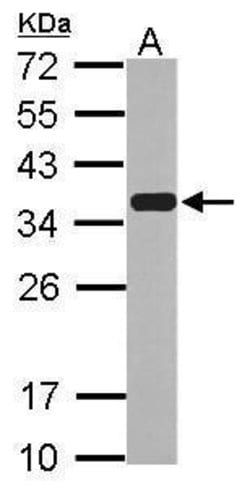


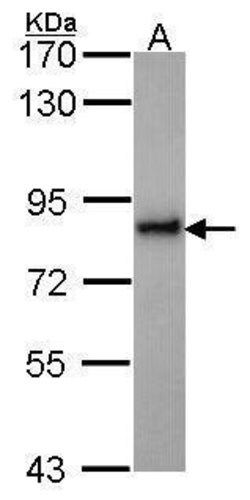

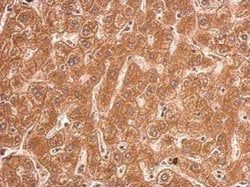
Description
- Recommended positive controls: human plasma, mouse plasma, rat plasma
- Predicted reactivity: Pig (85%), Sheep (83%), Bovine (83%)
- Store product as a concentrated solution
- Centrifuge briefly prior to opening the vial
- Ceruloplasmin encodes a protein that is a metalloprotein that binds most of the copper in plasma and is involved in the peroxidation of Fe(II)transferrin to Fe(III) transferrin
- Mutations in this gene cause aceruloplasminemia, which results in iron accumulation and tissue damage, and is associated with diabetes and neurologic abnormalities.