PIPA532849
GPR153 Polyclonal Antibody, Invitrogen™
Manufacturer: Thermo Scientific
Select a Size
| Pack Size | SKU | Availability | Price |
|---|---|---|---|
| Each of 1 | PIPA532849-Each-of-1 | In Stock | ₹ 46,502.50 |
PIPA532849 - Each of 1
In Stock
Quantity
1
Base Price: ₹ 46,502.50
GST (18%): ₹ 8,370.45
Total Price: ₹ 54,872.95
Antigen
GPR153
Classification
Polyclonal
Conjugate
Unconjugated
Gene
GPR153
Gene Alias
1110065N12Rik; AI449320; G protein-coupled receptor 153; G protein-coupled receptor PGR1; GPR153; G-protein coupled receptor PGR1; Pgr1; probable G-protein coupled receptor 153
Host Species
Rabbit
Purification Method
Antigen affinity chromatography
Regulatory Status
RUO
Gene ID (Entrez)
387509
Content And Storage
Store at 4°C short term. For long term storage, store at -20°C, avoiding freeze/thaw cycles.
Form
Liquid
Applications
ELISA, Immunohistochemistry (Paraffin)
Concentration
1 mg/mL
Formulation
PBS with 0.1% sodium azide
Gene Accession No.
Q6NV75
Gene Symbols
GPR153
Immunogen
Synthetic 16 amino acid peptide from C-terminal cytoplasmic domain of human GPR153.
Quantity
50 μg
Primary or Secondary
Primary
Target Species
Human, Non-human Primate
Product Type
Antibody
Isotype
IgG
Related Products
Description
- Percent identity with other species by BLAST analysis: Human, Monkey (100%); Rat (94%); Marmoset, Mouse, Bovine, Hamster, Elephant (88%); Bat, Dog, Pig (81%)
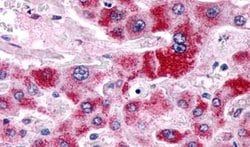
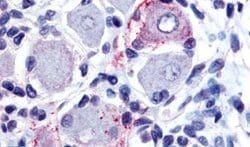
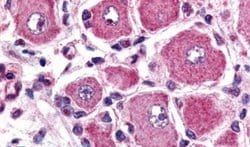
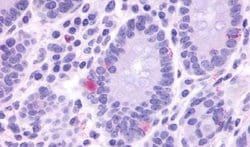
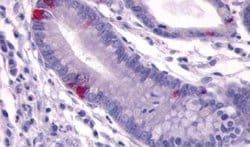
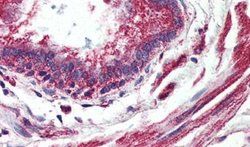
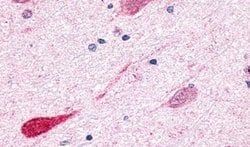
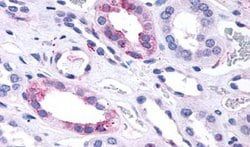
- For IHC(P), use heat induced antigen retrieval in pH 6.0 citrate buffer
- After incubation with the primary antibody, slides were incubated with biotinylated secondary antibody, followed by alkaline phosphatase-streptavidin and chromogen
- G protein-coupled receptors (GPRs), also known as seven transmembrane receptors, heptahelical receptors or 7TM receptors, comprise a superfamily of proteins that play a role in many different stimulus-response pathways
- G protein coupled receptors translate extracellular signals into intracellular signals (G protein activation) and they respond to a variety of signaling molecules, such as hormones and neurotransmitters
- GPR153 (G protein-coupled receptor 153), also known as PGR1, is a 609 amino acid multi-pass membrane protein that functions as an orphan receptor and belongs to the GPR1 family
- The gene encoding GPR153 maps to human chromosome 1, which spans 260 million base pairs, contains over 3,000 genes and comprises nearly 8% of the human genome.