PIPA532895
KIAA1324 Polyclonal Antibody, Invitrogen™
Manufacturer: Thermo Scientific
Select a Size
| Pack Size | SKU | Availability | Price |
|---|---|---|---|
| Each of 1 | PIPA532895-Each-of-1 | In Stock | ₹ 46,591.50 |
PIPA532895 - Each of 1
In Stock
Quantity
1
Base Price: ₹ 46,591.50
GST (18%): ₹ 8,386.47
Total Price: ₹ 54,977.97
Antigen
KIAA1324
Classification
Polyclonal
Conjugate
Unconjugated
Gene
KIAA1324
Gene Alias
EIG121; Estrogen-induced gene 121 protein; KIAA1324; maba1; UNQ2426/PRO4985; UPF0577 protein KIAA1324
Host Species
Rabbit
Purification Method
Antigen affinity chromatography
Regulatory Status
RUO
Gene ID (Entrez)
57535
Content And Storage
Store at 4°C short term. For long term storage, store at -20°C, avoiding freeze/thaw cycles.
Form
Liquid
Applications
Immunohistochemistry (Paraffin)
Concentration
1 mg/mL
Formulation
PBS with 0.1% sodium azide
Gene Accession No.
Q6UXG2
Gene Symbols
KIAA1324
Immunogen
Synthetic 17 amino acid peptide from internal region of human KIAA1324.
Quantity
50 μg
Primary or Secondary
Primary
Target Species
Human
Product Type
Antibody
Isotype
IgG
Related Products

Description
- Percent identity with other species by BLAST analysis: Human, Chimpanzee, Gorilla, Orangutan, Gibbon, Monkey (100%); Marmoset, Elephant (94%); Galago, Panda, Dog, Horse, Opossum, Platypus (88%); Mouse, Rat, Hamster, Bat, Bovine, Pig, Lizard (82%)
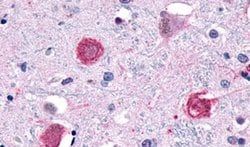
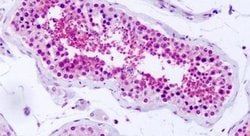
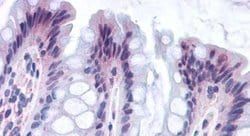
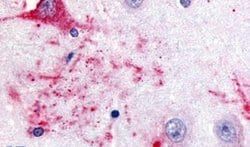
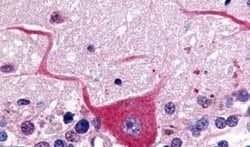
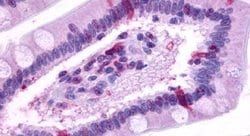
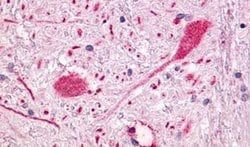
- For IHC(P), use heat induced antigen retrieval in pH 6.0 citrate buffer
- After incubation with the primary antibody, slides were incubated with biotinylated secondary antibody, followed by alkaline phosphatase-streptavidin and chromogen
- Expression of this gene is induced by estrogen and the encoded protein has been characterized as a transmembrane protein
- The encoded protein has been found in to correlate with survival in certain carcinomas (PMID: 21102415) and may be important for cellular response to stress (PMID: 21072319)
- Alternative splicing results in multiple transcript variants.