BAI1 Polyclonal Antibody, Invitrogen™
Manufacturer: Thermo Scientific
Select a Size
| Pack Size | SKU | Availability | Price |
|---|---|---|---|
| Each of 1 | PIPA533352-Each-of-1 | In Stock | ₹ 46,502.50 |
PIPA533352 - Each of 1
In Stock
Quantity
1
Base Price: ₹ 46,502.50
GST (18%): ₹ 8,370.45
Total Price: ₹ 54,872.95
Antigen
BAI1
Classification
Polyclonal
Conjugate
Unconjugated
Gene
ADGRB1
Gene Alias
ADGRB1; Adhesion G protein-coupled receptor B1; B830018M07Rik; Bai1; brain-specific angiogenesis inhibitor 1; FLJ41988; GDAIF; mKIAA4089; R75078; Vasculostatin-120; Vasculostatin-40; Vstat120; Vstat40; Vstat-40
Host Species
Rabbit
Purification Method
Antigen affinity chromatography
Regulatory Status
RUO
Gene ID (Entrez)
100766156, 100859755, 107831, 524070, 575
Content And Storage
Store at 4°C short term. For long term storage, store at -20°C, avoiding freeze/thaw cycles.
Form
Liquid
Applications
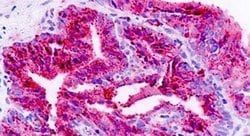
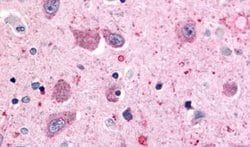
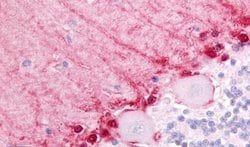
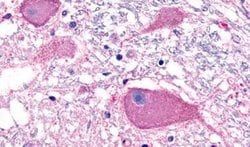
Immunohistochemistry (Paraffin)
Concentration
1 mg/mL
Formulation
PBS with 0.1% sodium azide
Gene Accession No.
O14514, Q3UHD1
Gene Symbols
ADGRB1
Immunogen
Synthetic 16 amino acid peptide from C-terminus of human BAI1.
Quantity
50 μg
Primary or Secondary
Primary
Target Species
Bovine, Chicken, Hamster, Human, Mouse, Non-human Primate
Product Type
Antibody
Isotype
IgG
Related Products

Description
- Percent identity with other species by BLAST analysis: Human, Gorilla, Gibbon, Monkey, Mouse, Rat, Hamster, Panda, Bovine, Opossum, Chicken, Platypus (100%) Xenopus, Zebrafish (94%)
- Adgrb1 is a phosphatidylserine receptor that enhances the engulfment of apoptotic cells, likely to be a potent inhibitor of angiogenesis in brain, and may play a significant role as a mediator of the p53 signal in suppression of glioblastoma
- Adgrb1 may function in cell adhesion and signal transduction in the brain
- Angiogenesis is controlled by a local balance between stimulators and inhibitors of new vessel growth and is suppressed under normal physiologic conditions
- Angiogenesis has been shown to be essential for growth and metastasis of solid tumors
- As such, tumors obtain blood supply for their growth, are potently angiogenic and attract new vessels as results of increased secretion of inducers and decreased production of endogenous negative regulators
- Adgrb1 contains at least one functional p53-binding site within an intron, and its expression has been shown to be induced by wildtype p53
- There are two other brain-specific angiogenesis inhibitor genes, designated Adgrb1 and BAI3, which have similar tissue specificities and structures, however only Adgrb1 is transcriptionally regulated by p53
- Adgrb1 is postulated to be a member of the secretin receptor family, an inhibitor of angiogenesis and a growth suppressor of glioblastomas
- Diseases associated with ADGRB1 include Glioblastoma.