GPR68 Polyclonal Antibody, Invitrogen™
Manufacturer: Thermo Scientific
Select a Size
| Pack Size | SKU | Availability | Price |
|---|---|---|---|
| Each of 1 | PIPA533757-Each-of-1 | In Stock | ₹ 46,502.50 |
PIPA533757 - Each of 1
In Stock
Quantity
1
Base Price: ₹ 46,502.50
GST (18%): ₹ 8,370.45
Total Price: ₹ 54,872.95
Antigen
GPR68
Classification
Polyclonal
Conjugate
Unconjugated
Gene
GPR68
Gene Alias
BB131428; Brgr1; Brgrb; G protein-coupled receptor 68; GPR12A; Gpr68; G-protein coupled receptor 68; Ogr1; OGR-1; ovarian cancer G protein-coupled receptor, 1; ovarian cancer G-protein coupled receptor 1; Sphingosylphosphorylcholine receptor
Host Species
Rabbit
Purification Method
Antigen affinity chromatography
Regulatory Status
RUO
Gene ID (Entrez)
8111
Content And Storage
Store at 4°C short term. For long term storage, store at -20°C, avoiding freeze/thaw cycles.
Form
Liquid
Applications
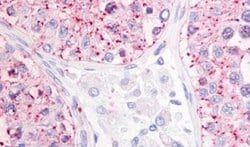
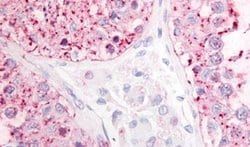
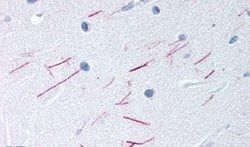
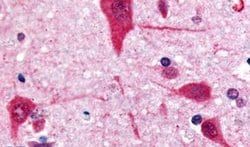
ELISA, Immunocytochemistry, Immunohistochemistry (Paraffin)
Concentration
1 mg/mL
Formulation
PBS with 0.1% sodium azide
Gene Accession No.
Q15743
Gene Symbols
GPR68
Immunogen
Synthetic 20 amino acid peptide from C-terminus of human GPR68.
Quantity
50 μg
Primary or Secondary
Primary
Target Species
Human
Product Type
Antibody
Isotype
IgG
Related Products
Description
- Percent identity with other species by BLAST analysis: Human, Gibbon, Monkey (100%) Marmoset, Mouse, Rat, Bovine, Hamster, Elephant, Horse (95%) Rabbit (85%) Pig (80%)
- GPR68 (also known as OGR1 - ovarian cancer G-protein coupled receptor 1) is a proton-sensing receptor involved in pH homeostasis
- It represents an osteoblastic pH sensor regulating the cell-mediated response to acidosis in bone
- GPR68 mediates its action by association with G proteins that stimulate inositol phosphate (IP) production or CA2+ mobilization
- The receptor is almost silent at pH 7.8 but fully activated at pH 6.8
- Also found to serve as a tumor suppressor in prostate cancer
- Mutations to the gene result in amelogenesis imperfecta, hypomaturation type 2A6.