HUNK Polyclonal Antibody, Invitrogen™
Manufacturer: Thermo Scientific
Select a Size
| Pack Size | SKU | Availability | Price |
|---|---|---|---|
| Each of 1 | PIPA533856-Each-of-1 | In Stock | ₹ 46,502.50 |
PIPA533856 - Each of 1
In Stock
Quantity
1
Base Price: ₹ 46,502.50
GST (18%): ₹ 8,370.45
Total Price: ₹ 54,872.95
Antigen
HUNK
Classification
Polyclonal
Conjugate
Unconjugated
Gene
HUNK
Gene Alias
B19; Bstk1; Hormonally up-regulated neu tumor-associated kinase; hormonally upregulated neu tumor-associated kinase; hormonally up-regulated Neu-associated kinase; hormonally upregulated Neu-associated kinase; Hunk; MAKV; Mak-v; RGD1565091; serine/threonine protein kinase MAK-V; serine/threonine-protein kinase MAK-V
Host Species
Rabbit
Purification Method
Antigen affinity chromatography
Regulatory Status
RUO
Gene ID (Entrez)
30811
Content And Storage
Store at 4°C short term. For long term storage, store at -20°C, avoiding freeze/thaw cycles.
Form
Liquid
Applications
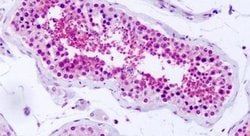
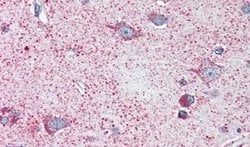
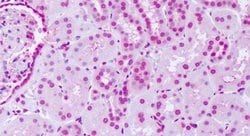
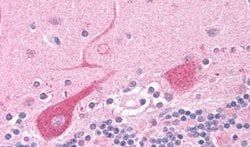
Immunohistochemistry (Paraffin)
Concentration
1 mg/mL
Formulation
PBS with 0.1% sodium azide
Gene Accession No.
P57058
Gene Symbols
HUNK
Immunogen
Synthetic 18 amino acid peptide from internal region of human HUNK.
Quantity
50 μg
Primary or Secondary
Primary
Target Species
Human, Non-human Primate
Product Type
Antibody
Isotype
IgG
Related Products
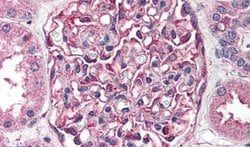
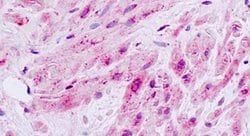
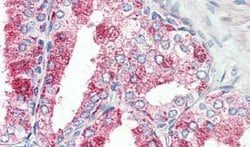
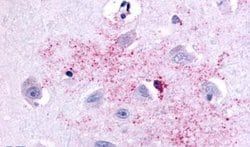
Description
- Percent identity with other species by BLAST analysis: Human, Chimpanzee, Gorilla, Gibbon, Monkey, Marmoset (100%)
- HUNK serine/threonine kinase or hormonally up-regulated Neu-associated kinase is a member of the mitogen-activated protein kinase family which is essential for mammary tumor metastasis
- HUNK deletion in mice did not alter viability, fertility, longevity, or propensity to develop tumors and it is also dispensable for murine development
- HUNK has been shown to participate in vesicular transport
- Additionally, functional studies in mice suggest that HUNK regulates endocytosis via interaction with rabaptin-5 protein and induces changes in mammary glands during pregnancy
- HUNK expression has been documented in mouse brain, breast, embryo, and fetus
- ESTs have been isolated from several human tissue libraries, including normal ear.