CD53 Polyclonal Antibody, Invitrogen™
Manufacturer: Thermo Scientific
Select a Size
| Pack Size | SKU | Availability | Price |
|---|---|---|---|
| Each of 1 | PIPA583861-Each-of-1 | In Stock | ₹ 48,905.50 |
PIPA583861 - Each of 1
In Stock
Quantity
1
Base Price: ₹ 48,905.50
GST (18%): ₹ 8,802.99
Total Price: ₹ 57,708.49
Antigen
CD53
Classification
Polyclonal
Conjugate
Unconjugated
Gene
Cd53
Gene Alias
AI323659; antigen MOX44 identified by monoclonal antibody MRC-OX44; Cd53; CD53 antigen; CD53 glycoprotein; CD53 molecule; CD53 tetraspan antigen; cell surface antigen; cell surface glycoprotein CD53; Leukocyte antigen MRC OX-44; leukocyte surface antigen CD53; MOX44; OX44; Ox-44; tetraspanin-25; transmembrane glycoprotein; TSPAN25; tspan-25
Host Species
Rabbit
Purification Method
Anitgen affinity chromatography, Antigen affinity chromatography
Regulatory Status
RUO
Gene ID (Entrez)
963
Content And Storage
Store at 4°C short term. For long term storage, store at -20°C, avoiding freeze/thaw cycles.
Form
Liquid
Applications
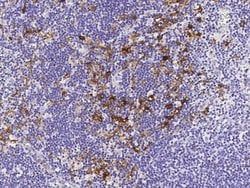
Immunohistochemistry
Concentration
0.05 mg/mL
Formulation
PBS with 40% glycerol and 0.02% sodium azide; pH 7.2
Gene Accession No.
P19397
Gene Symbols
Cd53
Immunogen
Recombinant protein corresponding to Human CD53
Quantity
100 μL
Primary or Secondary
Primary
Target Species
Human
Product Type
Antibody
Isotype
IgG
Related Products
Description
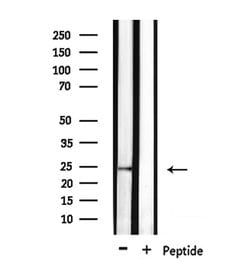
- Immunogen sequence: NEYVAKGLTD SIHRYHSDNS TKAAWDSIQS FLQCCGINGT SDWTSGPPAS CPSDRKVEGC YAKARLWFHS CD53 is a tetraspanin family transmembrane glycoprotein expressed in the lymphoid-myeloid lineage
- This molecule has been reported to form complexes with other leukocyte surface proteins such as CD2, CD19, CD21, MHC II, VLA-4 or tetraspanins CD37, CD81 and CD82, thus probably modulating various signaling processes
- CD53 is involved in radioresistancy of tumor cells and its triggering has anti-apoptotic effect
- In thymus, CD53 is up-regulated in response to positive selection signals during T cell development, and is strongly expressed upon macrophage exposure to bacterial lipopolysaccharide, whereas stimulation of neutrophils results in down-regulation of CD53 expression.