PMEPA1 Polyclonal Antibody, Invitrogen™
Manufacturer: Thermo Scientific
Select a Size
| Pack Size | SKU | Availability | Price |
|---|---|---|---|
| Each of 1 | PIPA584894-Each-of-1 | In Stock | ₹ 49,261.50 |
PIPA584894 - Each of 1
In Stock
Quantity
1
Base Price: ₹ 49,261.50
GST (18%): ₹ 8,867.07
Total Price: ₹ 58,128.57
Antigen
PMEPA1
Classification
Polyclonal
Conjugate
Unconjugated
Gene
PMEPA1
Gene Alias
2210418I02Rik, AW455466, Erg1.2, N4wbp4, Nedd4 WW binding protein 4, NEDD4 WW domain-binding protein 4, PMEPA1, Prostate transmembrane protein androgen induced 1, prostate transmembrane protein, androgen induced 1, protein TMEPAI, Solid tumor-associated 1 protein, STAG1, Tmepai, transmembrane prostate androgen-induced protein, transmembrane, prostate androgen induced RNA
Host Species
Rabbit
Purification Method
Anitgen affinity chromatography, Antigen affinity chromatography
Regulatory Status
RUO
Gene ID (Entrez)
56937
Content And Storage
Store at 4°C short term. For long term storage, store at -20°C, avoiding freeze/thaw cycles.
Form
Liquid
Applications
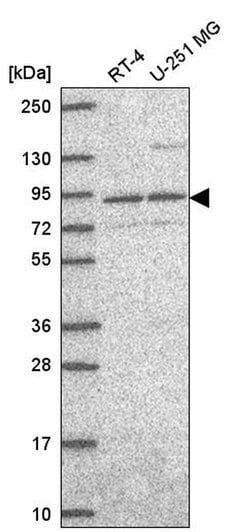
Immunocytochemistry, Western Blot, Western Blot
Concentration
0.1 mg/mL
Formulation
PBS with 40% glycerol and 0.02% sodium azide, pH 7.2
Gene Accession No.
Q969W9
Gene Symbols
PMEPA1
Immunogen
Recombinant protein corresponding to Human PMEPA1
Quantity
100 μL
Primary or Secondary
Primary
Target Species
Human
Product Type
Antibody
Isotype
IgG
Related Products



Description
- Immunogen sequence: VNSTAAAAAG QPNVSCTCNC KRSLFQSMEI TELE This gene encodes a transmembrane protein that contains a Smad interacting motif (SIM)
- Expression of this gene is induced by androgens and transforming growth factor beta, and the encoded protein suppresses the androgen receptor and transforming growth factor beta signaling pathways though interactions with Smad proteins
- Overexpression of this gene may play a role in multiple types of cancer
- Alternatively spliced transcript variants encoding multiple isoforms have been observed for this gene.