Phospho-PANK4 (Thr63) Polyclonal Antibody, Invitrogen™
Manufacturer: Thermo Scientific
Select a Size
| Pack Size | SKU | Availability | Price |
|---|---|---|---|
| Each of 1 | PIPA595686-Each-of-1 | In Stock | ₹ 48,905.50 |
PIPA595686 - Each of 1
In Stock
Quantity
1
Base Price: ₹ 48,905.50
GST (18%): ₹ 8,802.99
Total Price: ₹ 57,708.49
Antigen
Phospho-PANK4 (Thr63)
Classification
Polyclonal
Conjugate
Unconjugated
Gene
Pank4
Gene Alias
4'-phosphopantetheine phosphatase, D030031I12Rik, DKFZp547M242, Fang1, FLJ10782, hPanK4, hypothetical protein Fang1, mPanK4, Pank4, Pantothenate kinase, Pantothenate kinase 4, pantothenic acid kinase 4, R75150, rPanK4
Host Species
Rabbit
Purification Method
Antigen Affinity Chromatography
Regulatory Status
RUO
Gene ID (Entrez)
269614
Content And Storage
-20°, C, Avoid Freeze/Thaw Cycles
Form
Liquid
Applications
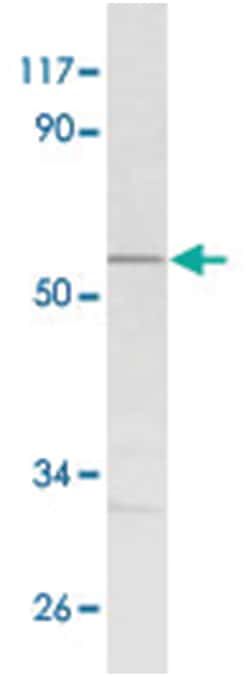
Western Blot
Concentration
0.25 mg/mL
Formulation
10mM HEPES with 0.15M NaCl, 100μg/mL BSA, 50% glycerol and no preservative, pH 7.5
Gene Accession No.
Q80YV4
Gene Symbols
Pank4
Immunogen
Synthetic phospho-peptide corresponding to amino acid residues surrounding Thr63 conjugated to KLH
Quantity
100 μL
Primary or Secondary
Primary
Target Species
Mouse
Product Type
Antibody
Isotype
IgG
Related Products

Description
- Antigen Affinity Purified from Pooled Serum This gene encodes a protein belonging to the pantothenate kinase family
- Pantothenate kinase is a key regulatory enzyme in the biosynthesis of coenzyme A (CoA) in bacteria and mammalian cells
- It catalyzes the first committed step in the universal biosynthetic pathway leading to CoA and is itself subject to regulation through feedback inhibition by CoA
- This family member is most abundant in muscle but is expressed in all tissues.