Phospho-PKC theta (Tyr90) Polyclonal Antibody, Invitrogen™
Manufacturer: Thermo Scientific
Select a Size
| Pack Size | SKU | Availability | Price |
|---|---|---|---|
| Each of 1 | PIPA599571-Each-of-1 | In Stock | ₹ 46,502.50 |
PIPA599571 - Each of 1
In Stock
Quantity
1
Base Price: ₹ 46,502.50
GST (18%): ₹ 8,370.45
Total Price: ₹ 54,872.95
Antigen
Phospho-PKC theta (Tyr90)
Classification
Polyclonal
Conjugate
Unconjugated
Gene
PRKCQ
Gene Alias
A130035A12Rik; AW494342; EC 2.7.11.13; kinase nPKC-theta; KPCT; MGC126514; MGC141919; nPKC-theta; PKC theta; PKC-0; Pkcq; PKCtheta; PKC-theta; PRKCQ; PRKCT; protein kinase C theta; protein kinase C theta type; protein kinase C, theta; RP11-563J2.1; si:ch211-239o15.1
Host Species
Rabbit
Purification Method
sequential chromatography
Regulatory Status
RUO
Gene ID (Entrez)
18761, 5588, 85420
Content And Storage
-20°C
Form
Liquid
Applications
Immunocytochemistry, Immunohistochemistry (Paraffin), Western Blot
Concentration
1 mg/mL
Formulation
PBS with 50% glycerol and 0.02% sodium azide; pH 7.4
Gene Accession No.
Q02111, Q04759, Q9WTQ0
Gene Symbols
PRKCQ
Immunogen
A synthesized peptide derived from human PRKCQ(Accession Q04759), corresponding to amino acid residues around phosphorylated Tyr90.
Quantity
100 μL
Primary or Secondary
Primary
Target Species
Human, Mouse, Rat
Product Type
Antibody
Isotype
IgG
Related Products



Description
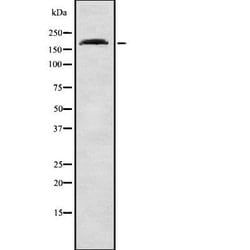
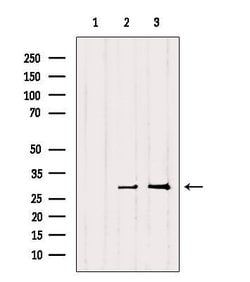
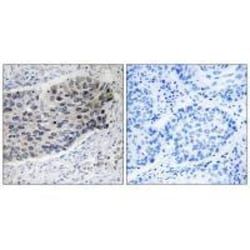
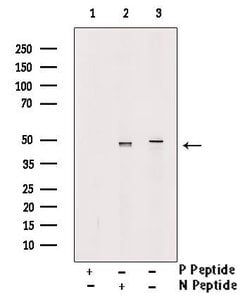
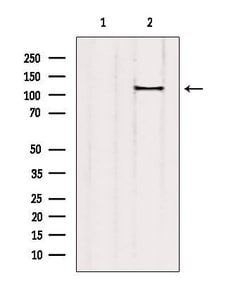
- Antibody detects endogenous levels of PKC theta only when phosphorylated at Tyr90
- Protein Kinase C (PKC) isoforms are serine/threonine kinases involved in signal transduction pathways that govern a wide range of physiological processes including differentiation, proliferation, gene expression, brain function, membrane transport and the organization of cytoskeletal and extracellular matrix proteins
- Increasing evidence from studies using in vitro and in vivo systems points to PKC as a key regulator of critical cell cycle transitions, including cell cycle entry and exit and the G1 and G2 checkpoints
- PKC-mediated control of these transitions can be negative or positive, depending on the timing of PKC activation during the cell cycle and on the specific PKC isozymes involve
- There have been at least 12 different PKC isoforms identified in humans to date, including alpha, beta I, beta II, gamma, delta, epsilon, zeta, eta, theta, iota, lambda, and mu
- The different PKC isoforms vary in structure, subcellular localization, tissue distribution and response to extracellular signals
- PKC beta II has been shown to be expressed, in part, in cardiac muscle, intestinal epithelium, kidney and pancreas
- PKC beta II has been shown to be involved in cell cycle progression and cancer proliferation.