PCSK9 Monoclonal Antibody (C5), Invitrogen™
Mouse Monoclonal Antibody
Manufacturer: Fischer Scientific
The price for this product is unavailable. Please request a quote
Antigen
PCSK9
Concentration
1 mg/mL
Classification
Monoclonal
Form
Liquid
Regulatory Status
RUO
Formulation
PBS with 50% glycerol and 0.05% Proclin 300, pH 7.4
Gene Alias
AI415265, AI747682, convertase subtilisin, convertase subtilisin/kexin type 9 preproprotein, FH3, HCHOLA3, hypercholesterolemia, LDLCQ1, NARC1, NARC-1, neural apoptosis regulated convertase 1, neural apoptosis-regulated convertase 1, OTTHUMP00000009833, PC9, PCSK9, Proprotein convertase 9, proprotein convertase PC9, proprotein convertase subtilisin/kexin type 9, PSEC0052, Subtilisin/kexin-like protease PC9
Gene Symbols
PCSK9
Isotype
IgG2b κ
Purification Method
Protein A/G
Gene
PCSK9
Clone
C5
Applications
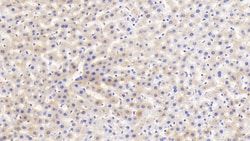
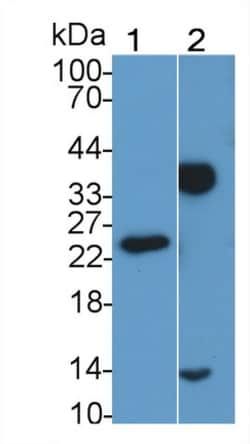
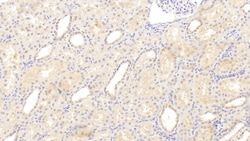
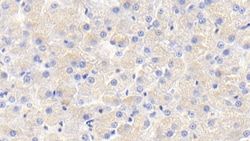
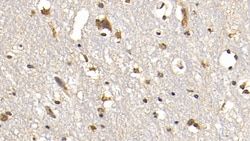
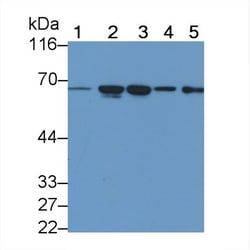
Immunocytochemistry, Immunohistochemistry (Paraffin), Western Blot
Conjugate
Unconjugated
Host Species
Mouse
Target Species
Rat
Gene Accession No.
P59996
Gene ID (Entrez)
298296
Immunogen
Recombinant Rat PCSK9 protein, Trp164-Phe428 (Accession #P59996)
Primary or Secondary
Primary
Content And Storage
Store at 4°C short term. For long term storage, store at -20°C, avoiding freeze/thaw cycles.
Related Products
Description
- PCSK9 is a proprotein convertase belonging to the proteinase K subfamily of the secretory subtilase family
- This protein is synthesized as a soluble zymogen that undergoes autocatalytic intramolecular processing in the endoplasmic reticulum
- The protein may function as a proprotein convertase
- The protein plays a role in cholesterol homeostasis and may have a role in the differentiation of cortical neurons.