COMT Monoclonal Antibody (C4), Invitrogen™
Mouse Monoclonal Antibody
Manufacturer: Fischer Scientific
The price for this product is unavailable. Please request a quote
Antigen
COMT
Concentration
1 mg/mL
Classification
Monoclonal
Form
Liquid
Regulatory Status
RUO
Formulation
PBS with 50% glycerol and 0.05% Proclin 300, pH 7.4
Gene Alias
Catechol O-methyltransferase, catecholamine-O-methyltransferase, catechol-O-methyltransferase, catechol-O-methyltransferase 1, catechol-O-methyltransferase isoform, Comt, Comt1, D16Wsu103e, D330014B15Rik, epididymis secretory sperm binding protein Li 98n, HEL-S-98n, OTTHUMP00000197749, OTTHUMP00000197750, testicular tissue protein Li 42
Gene Symbols
Comt
Isotype
IgG1 κ
Purification Method
Protein A/G
Gene
Comt
Clone
C4
Applications
Immunocytochemistry, Immunohistochemistry (Paraffin), Western Blot
Conjugate
Unconjugated
Host Species
Mouse
Target Species
Rat
Gene Accession No.
P22734
Gene ID (Entrez)
24267
Immunogen
Recombinant Rat COMT protein, Gly63-Ser264 (Accession #P22734)
Primary or Secondary
Primary
Content And Storage
Store at 4°C short term. For long term storage, store at -20°C, avoiding freeze/thaw cycles.
Related Products
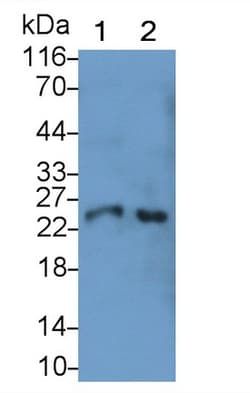
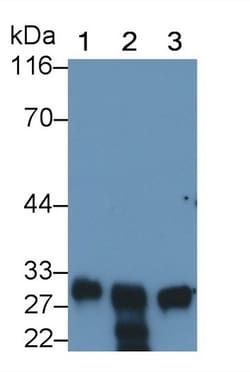
Description
- Catechol-O-methyltransferase catalyzes the transfer of a methyl group from S-adenosylmethionine to catecholamines, including the neurotransmitters dopamine, epinephrine, and norepinephrine
- This O-methylation results in one of the major degradative pathways of the catecholamine transmitters
- In addition to its role in the metabolism of endogenous substances, COMT is important in the metabolism of catechol drugs used in the treatment of hypertension, asthma, and Parkinson disease
- COMT is found in two forms in tissues, a soluble form (S-COMT) and a membrane-bound form (MB-COMT)
- The differences between S-COMT and MB-COMT reside within the N-termini
- Several transcript variants are formed through the use of alternative translation initiation sites and promoters.