3851553
GST-π Mouse, Unlabeled, Clone: 3, BD
Mouse Monoclonal Antibody
Manufacturer: Fischer Scientific
The price for this product is unavailable. Please request a quote
Antigen
GST-π
Concentration
250μg/mL
Classification
Monoclonal
Host Species
Mouse
Research Discipline
Cell Biology
Formulation
Aqueous buffered solution containing BSA, glycerol, and ≤0.09% sodium azide.
Isotype
IgG1
Purification Method
Affinity Purified
Description
Glutathione-S-Transferase-π
Clone
3
Applications
Western Blot
Conjugate
Unconjugated
Regulatory Status
RUO
Target Species
Canine, Human, Mouse, Rat
Immunogen
Human GST-π aa. 5-210
Primary or Secondary
Primary
Content And Storage
Store undiluted at -20°C.
Related Products
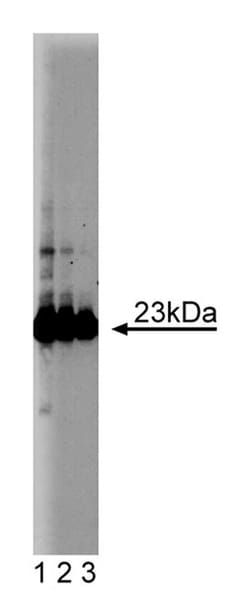

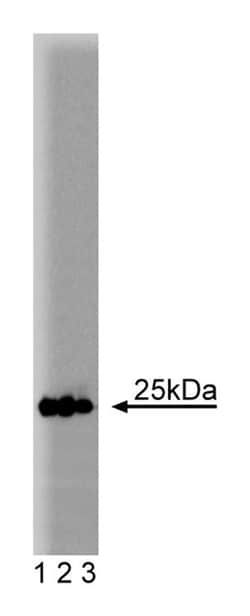

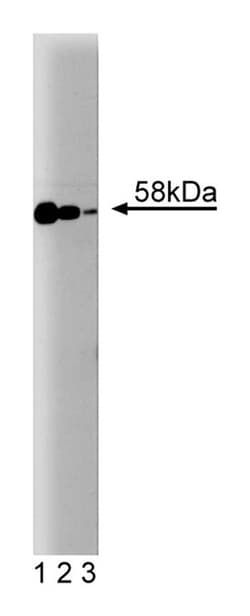
Description
- Glutathione-S-Transferases (GSTs) are a family of dimeric proteins that catalyze the S-conjugation of glutathione with many compounds for detoxification
- The GSTs are categorized into four classes based on their biochemical and structural properties: α, μ, π, and θ
- GST-π is of particular interest because it is over-expressed in many tumors, but is either absent or expressed at low levels in the corresponding normal tissues
- This high expression of GST-π is associated with malignant transformation and correlates with a decrease in GST activity
- Three different GST-π proteins have been isolated and designated as hGSTP1™A, hGSTP1™B, and hGSTP1™C
- These isoforms are nearly identical, varying by only one to two amino acids
- Immunofluorescence, Immunoprecipitation, Western Blotting