50-155-7776
mTOR Rabbit anti-Human, Polyclonal, Bethyl Laboratories
Manufacturer: Bethyl Laboratories, Inc
Select a Size
| Pack Size | SKU | Availability | Price |
|---|---|---|---|
| Each of 1 | 50-155-7776-Each-of-1 | In Stock | ₹ 43,546.81 |
50-155-7776 - Each of 1
In Stock
Quantity
1
Base Price: ₹ 43,546.81
GST (18%): ₹ 7,838.426
Total Price: ₹ 51,385.236
Antigen
mTOR
Classification
Polyclonal
Conjugate
Unconjugated
Gene
MTOR
Gene Alias
MTOR, m-TOR, Mechanistic Target Of Rapamycin, Mammalian Target Of Rapamycin, FRAP, FRAP1, FRAP2, FK506 binding protein 12-rapamycin associated protein, FKBP-Rapamycin Associated Protein, Rapamycin Target Protein, Serine/Threonine-Protein Kinase MTOR, EC 2.7.11.1, RAFT1, RAPT1, mTORC1
Host Species
Rabbit
Purification Method
Antigen affinity chromatography
Regulatory Status
RUO
Gene ID (Entrez)
2475
Content And Storage
4° C
Form
Liquid
Applications
Immunocytochemistry, Immunoprecipitation, Western Blot
Concentration
1 mg/ml
Formulation
phosphate, tris citrate with 0.09% sodium azide; pH 7-8
Gene Accession No.
P42345
Gene Symbols
MTOR
Immunogen
Between 200 and 250
Quantity
100 μL
Primary or Secondary
Primary
Target Species
Human
Product Type
Antibody
Isotype
IgG
Related Products
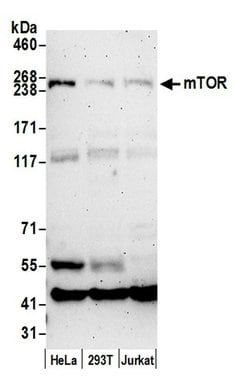


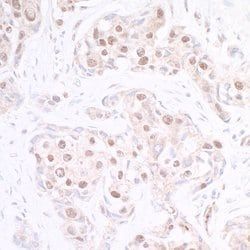
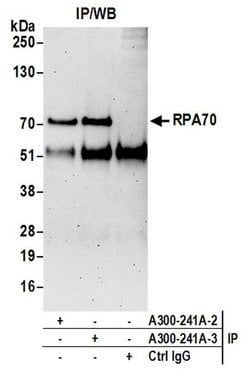
Description
- The recommended shelf life for this product is 1 year from date of receipt
- Based on 100% sequence identity, this antibody is predicted to react with Mouse and Rat Mammalian target of rapamycin (mTOR) is a serine/threonine kinase that plays a key role in cell growth, cell proliferation, and protein synthesis
- mTOR mediates phosphoinositide 3-kinase and Akt/PKB signaling, resulting in phosphorylation of 4EBP1, and initiation of mRNA translation
- A second pathway involves regulation of ribosomal S6 kinase, which affects ribosome biogenesis and translation elongation
- Mutations affecting the gene results in Smith-Kingsmore syndrome.