Insulin Monoclonal Antibody (ICBTACLS), Alexa Fluor™ 488, eBioscience™, Invitrogen™
Mouse Monoclonal Antibody
Manufacturer: Fischer Scientific
The price for this product is unavailable. Please request a quote
Antigen
Insulin
Concentration
0.5 mg/mL
Classification
Monoclonal
Form
Liquid
Regulatory Status
RUO
Formulation
PBS with 0.09% sodium azide; pH 7.2
Gene Alias
AA986540; IDDM; IDDM1; IDDM2; ILPR; INS; Ins1; Ins-1; Ins2; Ins-2; Ins2-rs1; InsII; Insulin; insulin 1; insulin 2; Insulin A chain; Insulin B chain; insulin I; insulin II; insulin-1; Insulin-1 A chain; Insulin-1 B chain; Insulin-2; Insulin-2 A chain; Insulin-2 B chain; IRDN; Mody; MODY10; Mody4; preproinsulin; proinsulin
Gene Symbols
INS, Ins1, Ins2
Primary or Secondary
Primary
Content And Storage
4° C, store in dark, DO NOT FREEZE!
Gene
INS
Clone
ICBTACLS
Applications
Immunocytochemistry, Immunohistochemistry (Paraffin)
Conjugate
Alexa Fluor 488
Host Species
Mouse
Target Species
Human, Mouse, Rat
Gene Accession No.
P01308, P01322, P01323, P01325, P01326
Gene ID (Entrez)
16333, 16334, 24505, 24506, 3630
Isotype
IgG2a κ
Purification Method
Affinity chromatography
Product Type
Antibody
Related Products




Description
- Description: This ICBTACLS monoclonal antibody reacts with the hormone insulin, responsible for regulation of carbohydrate and fat metabolism
- Blood glucose levels are maintained by insulin
- Insulin secretion from pancreatic beta-cells within the islets of Langerhans results in uptake of excess glucose from the blood into organs and its storage in the form of glycogen
- Patients with type 1 diabetes have an autoimmune destruction of insulin-producing beta-cells in the pancreas, resulting in insulin deficiency and elevated levels of blood glucose
- Patients with type 2 diabetes have insulin resistance where insulin becomes less effective at reducing the amount of blood glucose
- Insulin is also important for proper endothelial cell function in with respect to vascular elasticity in response to changing blood pressure and plays a role in cognition, learning, and memory
- The ICBTACLS antibody recognizes human, mouse, and rat insulin
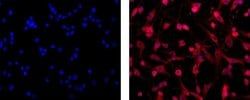
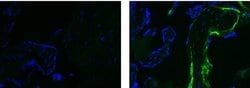
- Applications Reported: This ICBTACLS antibody has been reported for use in immunohistochemical staining of formalin-fixed paraffin embedded tissue sections, and microscopy
- Applications Tested: This ICBTACLS antibody has been tested by immunohistochemistry of formalin-fixed paraffin embedded tissue using low or high pH antigen retrieval and can be used at less than or equal to 5 μg/mL
- It is recommended that the antibody be carefully titrated for optimal performance in the assay of interest
- Insulin is a peptide hormone secreted by beta cells of the pancreatic islets
- It regulates carbohydrate, protein and lipid metabolism by enhancing membrane transport of glucose, amino acids, and certain ions
- It also promotes glycogen storage, formation of triglycerides and synthesis of proteins and nucleic acids
- Insulin is 51-amino acid polypeptide product produced from a precursor peptide, proinsulin
- Proinsulin is post-translationally cleaved into two chains (peptide A and peptide B) that are covalently linked via two disulfide bonds and one molecule of C-peptide
- Insulin deficiency results in diabetes mellitus, one of the leading causes of morbidity and mortality in the general population
- Insulin is also present in tumors of b-cell origin such as insulinoma.