7144173
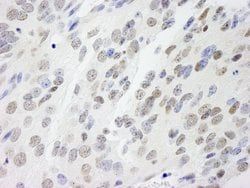
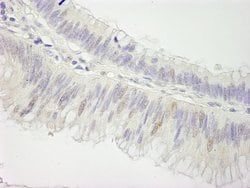
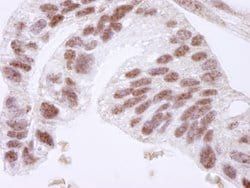
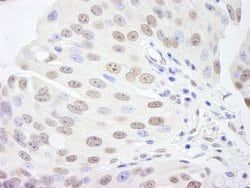
CHD3 Polyclonal Antibody, Bethyl Laboratories
Rabbit Polyclonal Antibody
Manufacturer: Fischer Scientific
The price for this product is unavailable. Please request a quote
Antigen
CHD3
Classification
Polyclonal
Form
Liquid
Regulatory Status
RUO
Formulation
TBS with 0.1% BSA and 0.09% sodium azide
Gene Alias
ZFH; Mi-2a; Mi2-ALPHA; CHD3
Immunogen
Between 1950 and 2000
Primary or Secondary
Primary
Content And Storage
4° C
Gene
CHD3
Applications
Immunohistochemistry
Conjugate
Unconjugated
Host Species
Rabbit
Target Species
Human, Mouse
Gene Accession No.
Q12873
Gene ID (Entrez)
1107, 216848
Isotype
IgG
Purification Method
Antigen affinity chromatography
Product Type
Antibody
Related Products

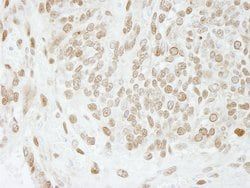
Description
- The recommended shelf life for this product is 1 year from date of receipt
- Based on 100% sequence identity, this antibody is predicted to react with Rat, Dog, Horse, Rabbit, Guinea pig_10141, Pig, Panda, Orangutan, Monkey, Gorilla, Chimpan This gene encodes a member of the CHD family of proteins which are characterized by the presence of chromo domains and SNF2-related helicase/ATPase domains
- This protein is one of the components of a histone deacetylase complex referred to as the Mi-2/NuRD complex which participates in the remodeling of chromatin by deacetylating histones
- Chromatin remodeling is essential for many processes including transcription
- Autoantibodies against this protein are found in a subset of patients with dermatomyositis
- Three alternatively spliced transcripts encoding different isoforms have been described.