7144178
APC Polyclonal Antibody, Bethyl Laboratories
Rabbit Polyclonal Antibody
Manufacturer: Fischer Scientific
The price for this product is unavailable. Please request a quote
Antigen
APC
Classification
Polyclonal
Form
Liquid
Regulatory Status
RUO
Formulation
TBS with 0.1% BSA and 0.09% sodium azide
Gene Alias
Adenomatous Polyposis Coli, APC, DP2, DP2.5, DP3, FAP, FPC, GS
Gene Symbols
APC
Isotype
IgG
Purification Method
Antigen affinity chromatography
Product Type
Antibody
Applications
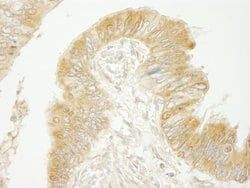
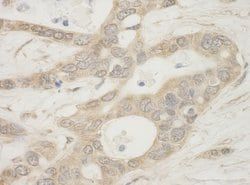
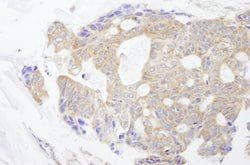
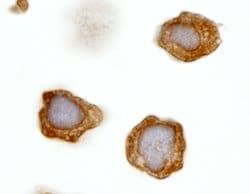
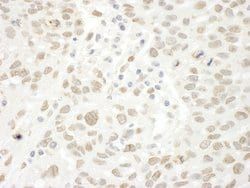
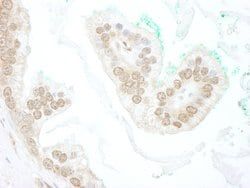
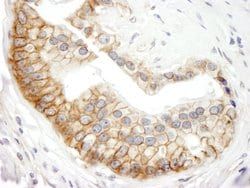
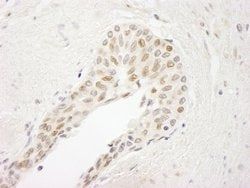
Immunohistochemistry
Conjugate
Unconjugated
Host Species
Rabbit
Target Species
Human
Gene Accession No.
P25054
Gene ID (Entrez)
324
Immunogen
Between 1 and 50
Primary or Secondary
Primary
Content And Storage
4° C
Gene
APC
Related Products
Description
- The recommended shelf life for this product is 1 year from date of receipt
- Based on 100% sequence identity, this antibody is predicted to react with Mouse, Rat, Zebrafish, X
- tropicalis, Chicken, Bovine, Dog, Horse, Rabbit, Guinea pig_1014 This gene encodes a tumor suppressor protein that acts as an antagonist of the Wnt signaling pathway
- It is also involved in other processes including cell migration and adhesion, transcriptional activation, and apoptosis
- Defects in this gene cause familial adenomatous polyposis (FAP), an autosomal domit pre-maligt disease that usually progresses to maligcy
- Disease-associated mutations tend to be clustered in a small region designated the mutation cluster region (MCR) and result in a truncated protein product.