7144556
BAD Polyclonal Antibody, Bethyl Laboratories
Rabbit Polyclonal Antibody
Manufacturer: Fischer Scientific
The price for this product is unavailable. Please request a quote
Antigen
BAD
Classification
Polyclonal
Form
Liquid
Regulatory Status
RUO
Formulation
TBS with 0.1% BSA and 0.09% sodium azide
Gene Alias
Bcl-associated death promoter
Immunogen
Between 1 and 50
Primary or Secondary
Primary
Content And Storage
4° C
Gene
BAD
Applications
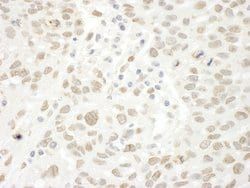
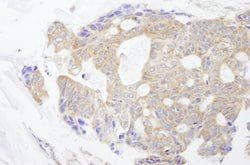
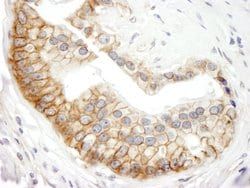
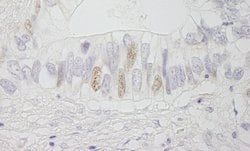
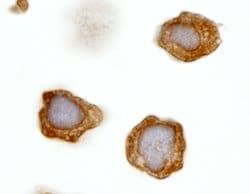
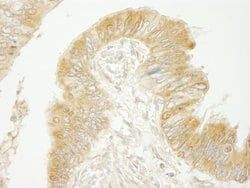
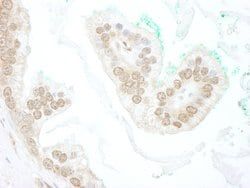
Immunofluorescence, Immunohistochemistry
Conjugate
Unconjugated
Host Species
Rabbit
Target Species
Human, Mouse
Gene Accession No.
Q61337, Q92934
Gene ID (Entrez)
12015, 572
Isotype
IgG
Purification Method
Antigen affinity chromatography
Product Type
Antibody
Related Products
Description
- The recommended shelf life for this product is 1 year from date of receipt
- Based on 100% sequence identity, this antibody is predicted to react with Rat, Dog, Panda, Cat, Orangutan, Monkey, Gorilla, Chimpanzee, hirteen-lined ground squirrel and S The protein encoded by this gene is a member of the BCL-2 family
- BCL-2 family members are known to be regulators of programmed cell death
- This protein positively regulates cell apoptosis by forming heterodimers with BCL-xL and BCL-2, and reversing their death repressor activity
- Proapoptotic activity of this protein is regulated through its phosphorylation
- Protein kinases AKT and MAP kinase, as well as protein phosphatase calcineurin were found to be involved in the regulation of this protein
- Alternative splicing of this gene results in two transcript variants which encode the same isoform.