7144484
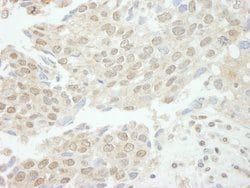
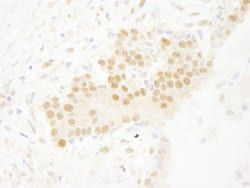
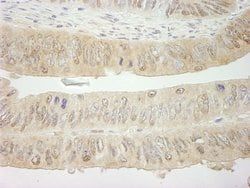
PRKAR2A/PKA-RIIalpha Polyclonal Antibody, Bethyl Laboratories
Rabbit Polyclonal Antibody
Manufacturer: Fischer Scientific
The price for this product is unavailable. Please request a quote
Antigen
PRKAR2A/PKA-RIIalpha
Classification
Polyclonal
Form
Liquid
Regulatory Status
RUO
Formulation
TBS with 0.1% BSA and 0.09% sodium azide
Gene Alias
MGC3606, PKR2, PRKAR2
Gene Symbols
PRKAR2A
Isotype
IgG
Purification Method
Antigen affinity chromatography
Product Type
Antibody
Applications
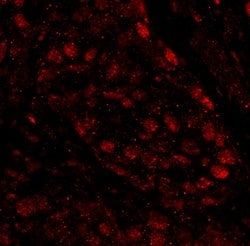
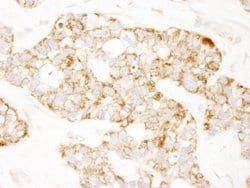
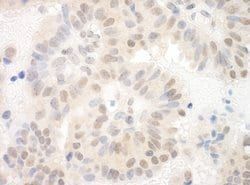
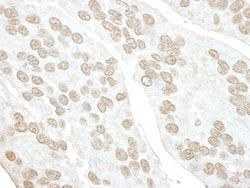
Immunohistochemistry
Conjugate
Unconjugated
Host Species
Rabbit
Target Species
Human
Gene Accession No.
P13861
Gene ID (Entrez)
5576
Immunogen
Between 50 and 100
Primary or Secondary
Primary
Content And Storage
4° C
Gene
PRKAR2A
Related Products

Description
- The recommended shelf life for this product is 1 year from date of receipt
- Based on 100% sequence identity, this antibody is predicted to react with Monkey, Gorilla, Northern white-cheeked gibbon and Crab-eating macaque cAMP is a signaling molecule important for a variety of cellular functions
- cAMP exerts its effects by activating the cAMP-dependent protein kinase (AMPK), which transduces the signal through phosphorylation of different target proteins
- The inactive holoenzyme of AMPK is a tetramer composed of two regulatory and two catalytic subunits
- cAMP causes the dissociation of the inactive holoenzyme into a dimer of regulatory subunits bound to four cAMP and two free monomeric catalytic subunits
- Four different regulatory subunits and three catalytic subunits of AMPK have been identified in humans
- The protein encoded by this gene is one of the regulatory subunits
- This subunit can be phosphorylated by the activated catalytic subunit
- It may interact with various A-kinase anchoring proteins and determine the subcellular localization of AMPK.