Ddit3 Monoclonal Antibody (9C8), Active Motif™
Mouse Monoclonal Antibody
Manufacturer: Fischer Scientific
The price for this product is unavailable. Please request a quote
Antigen
Ddit3
Concentration
1 mg/mL
Classification
Monoclonal
Form
Liquid
Regulatory Status
RUO
Formulation
PBS with 30% glycerol and 0.035% sodium azide; pH 7.5
Gene Alias
C/EBP homologous protein; C/EBP homoologous protein 10; C/EBP zeta; C/EBP-homologous protein; C/EBP-homologous protein 10; CCAAT/enhancer-binding protein homologous protein; CEBPZ; CHOP; CHOP10; CHOP-10; DDIT3; DDIT-3; DNA damage inducible transcript 3; DNA damage-inducible transcript 3 protein; DNA-damage inducible transcript 3; DNA-damage-inducible transcript 3; Gadd153; Growth arrest and DNA damage-inducible protein GADD153; Growth arrest and DNA-damage-inducible protein GADD153; MGC4154
Gene Symbols
DDIT3
Isotype
IgG2b
Purification Method
Protein G
Product Type
Antibody
Clone
9C8
Applications
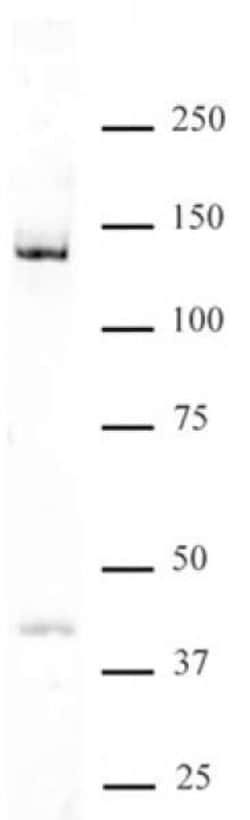
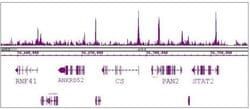
Immunoprecipitation, Western Blot
Conjugate
Unconjugated
Host Species
Mouse
Target Species
Mouse
Gene Accession No.
P35639
Gene ID (Entrez)
13198
Immunogen
This antibody was raised against full-length recombinant mouse Ddit3 protein.
Primary or Secondary
Primary
Content And Storage
-20°C, Avoid Freeze/Thaw Cycles
Gene
DDIT3
Related Products


Description
- GADD153 is a small nuclear protein that is capable of dimerizing with transcription factors C/EBP alpha and beta
- Once dimerized, this complex inhibits the normal binding and function of C/EBP to classical binding sites
- Inversely, the C/EBP GADD153 dimer gains binding activity to other non classical C/EBP stress related targets
- Under normal cellular conditions this protein is not expressed in detectable levels, but is highly unregulated during times of cellular/ER stress
- Examples of GADD153 inducing stress include: treatment with tunicamycin, nutrient starvation and reducing agents that interfere with the calcium flux across the ER membrane.