SIRT1 Monoclonal Antibody (2G1/F7), Active Motif™
Mouse Monoclonal Antibody
Manufacturer: Fischer Scientific
The price for this product is unavailable. Please request a quote
Antigen
SIRT1
Concentration
1 mg/mL
Classification
Monoclonal
Form
Liquid
Regulatory Status
RUO
Formulation
10mM sodium phosphate with 150mM NaCl, 30% glycerol and 0.035% sodium azide; pH 7.5
Gene Alias
75SirT1; AA673258; hSIR2; hSIRT1; mSIR2a; NAD-dependent deacetylase sirtuin-1; NAD-dependent protein deacetylase sirtuin-1; OTTHUMP00000198111; OTTHUMP00000198112; Regulatory protein SIR2 homolog 1; RP11-57G10.3; Sir2; Sir2a; SIR2alpha; Sir2l1; sir2-like 1; SIR2-like protein 1; SIRT1; SirtT1 75 kDa fragment; sirtuin 1; sirtuin 1 ((silent mating type information regulation 2, homolog) 1; sirtuin type 1
Gene Symbols
SIRT1
Isotype
IgG1
Purification Method
Protein G
Product Type
Antibody
Clone
2G1/F7
Applications
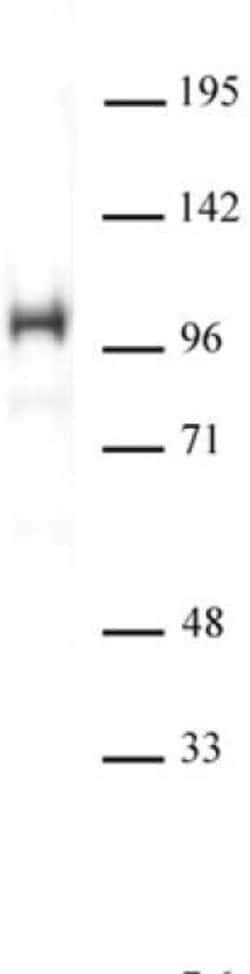
Western Blot
Conjugate
Unconjugated
Host Species
Mouse
Target Species
Human
Gene Accession No.
Q96EB6
Gene ID (Entrez)
23411
Immunogen
This SIRT1 antibody was raised against a synthetic peptide corresponding to amino acids 581-630 of human SIRT1.
Primary or Secondary
Primary
Content And Storage
-20°C, Avoid Freeze/Thaw Cycles
Gene
SIRT1
Related Products

Description
- NAD-dependent protein deacetylase sirtuin-1 (SIRT1) links transcriptional regulation directly to intracellular energetics and participates in the coordination of several separated cellular functions such as cell cycle, repsonse to DNA damage, metabolism, apoptosis, and autophagy
- SIRT1 can modulate chromatin function through deacetylation of histones and can promote alterations in the methylation of histone and DNA, leading to transcriptional repression
- It is essential in skeletal muscle cell differentiation and in response to low nutrients mediates the inhibitory effect on skeletal myoblast differentiation which also involves 5'-AMP-activated protein kinase (AMPK) and nicotinamide phosphoribosyltransferase (NAMPT).