7188719
BrdU Recombinant Mouse Monoclonal Antibody, AbFlex™, Active Motif™
Mouse Recombinant Monoclonal Antibody
Manufacturer: Fischer Scientific
The price for this product is unavailable. Please request a quote
Antigen
BrdU
Applications
Immunofluorescence
Conjugate
Unconjugated
Host Species
Mouse
Target Species
Human
Gene Alias
5-Bromo-2-deoxyuridine; Bromodeoxyuridine
Gene Symbols
FRA10B
Isotype
IgG2a
Purification Method
Protein A
Product Type
Antibody
Concentration
1 mg/mL
Classification
Monoclonal
Form
Liquid
Regulatory Status
RUO
Formulation
140mM HEPES, 32mM sodium acetate with 30% glycerol, 70mM NaCl and 0.035% sodium azide; pH 7.5
Gene ID (Entrez)
2432
Immunogen
This antibody was raised against Bromodeoxyuridine conjugated to BSA (Bovine Serum Albumin).
Primary or Secondary
Primary
Content And Storage
-20°C, Avoid Freeze/Thaw Cycles
Gene
FRA10B
Related Products

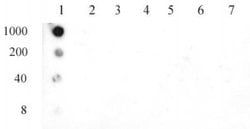

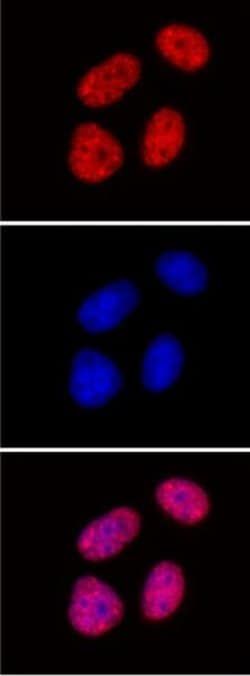


Description
- Bromodeoxyuridine (5-bromo-2-deoxyuridine, BrdU) is a synthetic nucleoside that is an analogue of thymidine
- BrdU is commonly used in the detection of proliferating cells in living tissues, and can be incorporated into the newly synthesized DNA of replicating cells (during the S phase of the cell cycle), substituting for thymidine during DNA replication
- Antibodies specific for BrdU can then be used to detect the incorporated chemical, thus indicating cells that were actively replicating their DNA
- Binding of the antibody requires denaturation of the DNA, usually by exposing the cells to acid or heat.