7240983
RARS Monoclonal Antibody (C9), Invitrogen™
Mouse Monoclonal Antibody
Manufacturer: Fischer Scientific
The price for this product is unavailable. Please request a quote
Antigen
RARS
Concentration
1 mg/mL
Classification
Monoclonal
Form
Liquid
Regulatory Status
RUO
Formulation
PBS with 50% glycerol and 0.05% ProClin 300
Gene Alias
2610011N19Rik; 2610037E21Rik; AL033339; arginine tRNA ligase 1, cytoplasmic; arginine--tRNA ligase, cytoplasmic; Arginyl-tRNA synthetase; arginyl-tRNA synthetase, cytoplasmic; argRS; AW985894; DALRD1; HLD9; MGC8641; RARS
Gene Symbols
RARS1
Isotype
IgG1 κ
Purification Method
Protein A/G
Product Type
Antibody
Clone
C9
Applications
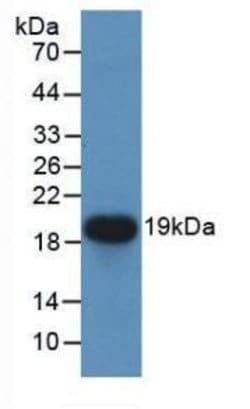
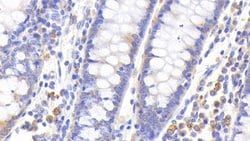
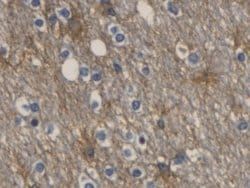
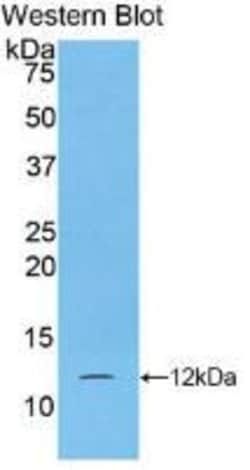
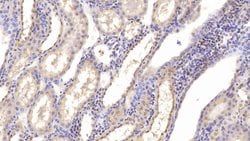
Immunohistochemistry (Paraffin), Western Blot
Conjugate
Unconjugated
Host Species
Mouse
Target Species
Human
Gene Accession No.
P54136
Gene ID (Entrez)
5917
Immunogen
Met1-Pro146 (Accession P54136), with N-terminal His Tag
Primary or Secondary
Primary
Content And Storage
-20°C
Gene
RARS1
Related Products

Description
- The fidelity of protein synthesis requires efficient discrimination of amino acid substrates by aminoacyl-tRNA synthetases
- ArgRS (Arginyl-tRNA synthetase), also known as RARS or DALRD1, belongs to the class-I aminoacyl-tRNA synthetase family that includes the related proteins, LeuRS, ValRS and IleRS
- These proteins are large monomeric proteins and play a major role in catalyzing the aminoacylation of tRNA by their cognate amino acid
- ArgRS localizes to the cytoplasm and exists as a monomer but can also associate with other tRNA synthetases and auxiliary proteins to form a multisubunit complex
- In the presence of ATP, arginine (Arg) and tRNA, ArgRS joins Arg to tRNA(Arg) at its synthetic active site
- Two cytoplasmic forms of ArgRS have been described in mammals, differing by the addition of a 73 amino acid sequence that is required for ArgRS assembly into the multisubunit complex.