7241010
PLAA Polyclonal Antibody, Invitrogen™
Rabbit Polyclonal Antibody
Manufacturer: Fischer Scientific
The price for this product is unavailable. Please request a quote
Antigen
PLAA
Applications
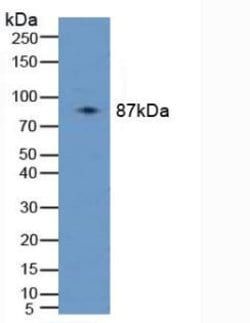
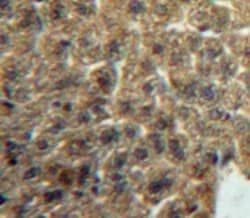
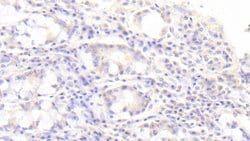
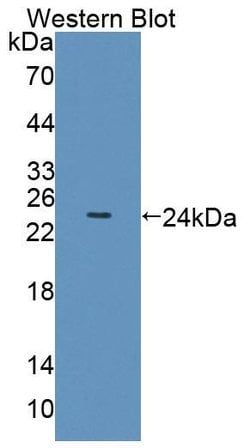
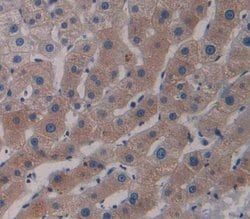
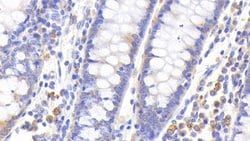
Immunohistochemistry (Paraffin), Western Blot
Conjugate
Unconjugated
Host Species
Rabbit
Target Species
Human
Gene Accession No.
Q9Y263
Gene ID (Entrez)
9373
Immunogen
Glu162-Ala312 (Accession Q9Y263), with N-terminal His Tag
Primary or Secondary
Primary
Content And Storage
-20°C
Gene
Plaa
Concentration
0.5 mg/mL
Classification
Polyclonal
Form
Liquid
Regulatory Status
RUO
Formulation
PBS with 50% glycerol and 0.05% ProClin 300
Gene Alias
2410007N06; AI536418; AU018445; AW208417; D4Ertd618e; DOA1; DOA1 homolog; phospholipase A2 activating protein; phospholipase A2, activating protein; phospholipase A-2-activating protein; phospholipase A2-activating protein; PLA2P; Plaa; PLAP; Ufd3
Gene Symbols
Plaa
Isotype
IgG
Purification Method
Antigen affinity chromatography
Product Type
Antibody
Related Products
Description
- Phospholipase A-2-activating protein (PLAA), also named PLAP, can interact with ubiquitin and is involved in the maintenance of ubiquitin levels
- PLAA contains multiple consensus domains including WD repeats, PFU domain and PUL domain
- Although the function of PLAA remains unclear, ubiquitin binding of PLAA might be the central role that connects ubiquitination and degradation in ERAD
- Recent finding revealed that PLAA served as a novel nociceptive mediator after incision, and its expression level is regulated by miR-203.