89-110-963
BRCA1, Mouse, Clone: MU, Abnova™
Manufacturer: Abnova Corporation
Select a Size
| Pack Size | SKU | Availability | Price |
|---|---|---|---|
| Each of 1 | 89-110-963-Each-of-1 | In Stock | ₹ 87,042.00 |
89-110-963 - Each of 1
In Stock
Quantity
1
Base Price: ₹ 87,042.00
GST (18%): ₹ 15,667.56
Total Price: ₹ 1,02,709.56
Antigen
BRCA1
Classification
Monoclonal
Conjugate
Unconjugated
Dilution
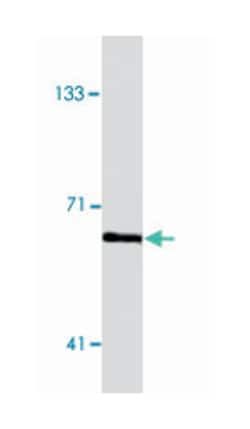
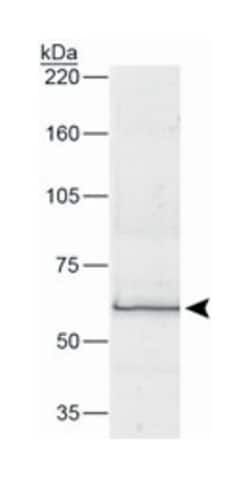
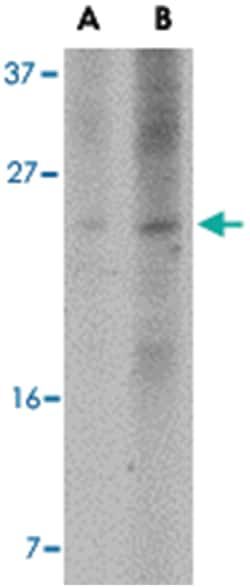
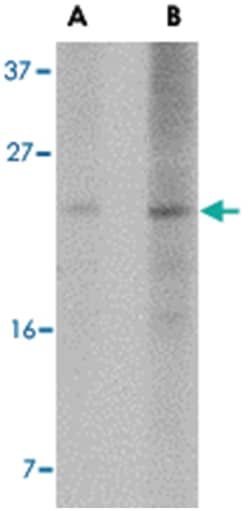
Western Blot (2-4 ug/mL) The optimal working dilution should be determined by the end user.
Gene
BRCA1
Gene Symbols
BRCA1
Immunogen
Recombinant protein corresponding to amino acids 1314-1864 of human BRCA1.
Regulatory Status
RUO
Gene ID (Entrez)
672
Target Species
Human
Form
Liquid
Applications
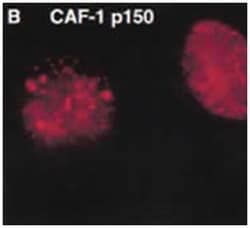
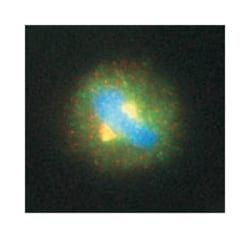
Immunofluorescence, Immunoprecipitation, Western Blot
Clone
MU
Description
Mouse monoclonal antibody raised against partial recombinant BRCA1.
Formulation
In buffer containing 0.05% sodium azide
Gene Alias
BRCAI/BRCC1/IRIS/PSCP/RNF53
Host Species
Mouse
Quantity
100 μL
Primary or Secondary
Primary
Test Specificity
This antibody recognizes the epitope aa 1600-1749.
Content And Storage
Store at -20°C or -80°C.Aliquot to avoid repeated freezing and thawing.
Related Products

Description
- This gene encodes a nuclear phosphoprotein that plays a role in maintaining genomic stability, and it also acts as a tumor suppressor
- The encoded protein combines with other tumor suppressors, DNA damage sensors, and signal transducers to form a large multi-subunit protein complex known as the BRCA1-associated genome surveillance complex (BASC)
- This gene product associates with RNA polymerase II, and through the C-terminal domain, also interacts with histone deacetylase complexes
- This protein thus plays a role in transcription, DNA repair of double-stranded breaks, and recombination
- Mutations in this gene are responsible for approximately 40% of inherited breast cancers and more than 80% of inherited breast and ovarian cancers
- Alternative splicing plays a role in modulating the subcellular localization and physiological function of this gene
- Many alternatively spliced transcript variants, some of which are disease-associated mutations, have been described for this gene, but the full-length natures of only some of these variants has been described
- A related pseudogene, which is also located on chromosome 17, has been identified
- [provided by RefSeq