AKT3 (phospho S472), Rabbit anti-Human, Polyclonal Antibody, Abnova™
Manufacturer: Abnova Corporation
Select a Size
| Pack Size | SKU | Availability | Price |
|---|---|---|---|
| Each of 1 | 89-133-602-Each-of-1 | In Stock | ₹ 57,138.00 |
89-133-602 - Each of 1
In Stock
Quantity
1
Base Price: ₹ 57,138.00
GST (18%): ₹ 10,284.84
Total Price: ₹ 67,422.84
Antigen
AKT3
Classification
Polyclonal
Description
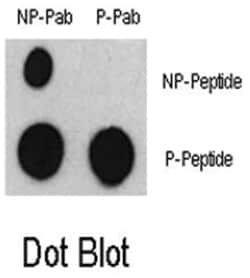
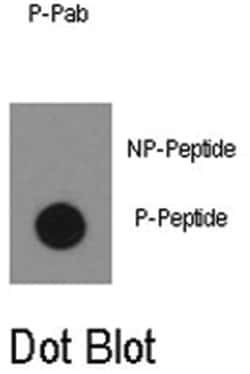
Rabbit polyclonal antibody raised against synthetic phosphopeptide of AKT3.
Formulation
In PBS (0.09% sodium azide)
Gene Accession No.
NP_005456;Q9Y243
Gene Symbols
AKT3
Immunogen
Synthetic phosphopeptide (conjugated with KLH) corresponding to residues surrounding S472 of human AKT3.
Quantity
400 μL
Primary or Secondary
Primary
Target Species
Human
Form
Liquid
Applications
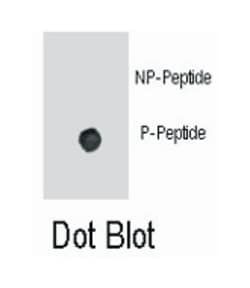
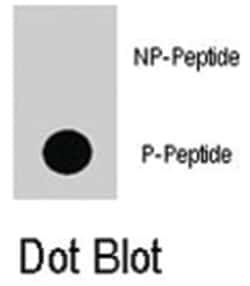
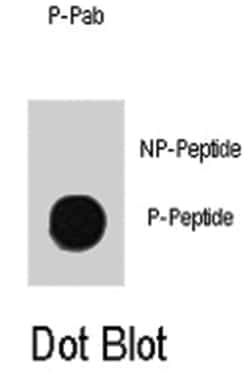
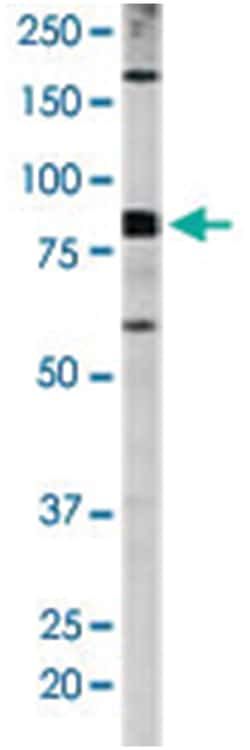
Dot Blot, ELISA
Conjugate
Unconjugated
Dilution
ELISA (1:1000) Dot Blot (1:500) The optimal working dilution should be determined by the end user.
Gene
AKT3
Gene Alias
DKFZp434N0250/PKB-GAMMA/PKBG/PRKBG/RAC-PK-gamma/RAC-gamma/STK-2
Host Species
Rabbit
Purification Method
Peptide affinity purification
Regulatory Status
RUO
Gene ID (Entrez)
10000
Content And Storage
Store at 4°C. For long term storage store at -20°C.Aliquot to avoid repeated freezing and thawing.
Related Products
Description
- The protein encoded by this gene is a member of the AKT, also called PKB, serine/threonine protein kinase family
- AKT kinases are known to be regulators of cell signaling in response to insulin and growth factors
- They are involved in a wide variety of biological processes including cell proliferation, differentiation, apoptosis, tumorigenesis, as well as glycogen synthesis and glucose uptake
- This kinase has been shown to be stimulated by platelet-derived growth factor (PDGF), insulin, and insulin-like growth factor 1 (IGF1)
- Alternatively splice transcript variants encoding distinct isoforms have been described
- [provided by RefSeq