AURKB/AURKC (phospho T236) Rabbit anti-Human, Mouse, Rat, Polyclonal , Abnova™
Manufacturer: Abnova Corporation
Select a Size
| Pack Size | SKU | Availability | Price |
|---|---|---|---|
| Each of 1 | 89-956-738-Each-of-1 | In Stock | ₹ 55,803.00 |
89-956-738 - Each of 1
In Stock
Quantity
1
Base Price: ₹ 55,803.00
GST (18%): ₹ 10,044.54
Total Price: ₹ 65,847.54
Antigen
AURKB/AURKC (phospho T236)
Classification
Polyclonal
Description
Rabbit polyclonal antibody raised against synthetic phosphopeptide of human AURKB/AURKC.
Formulation
In PBS (without Mg2+ and Ca2+), 150mM NaCl, pH 7.4 (50% glycerol, 0.02% sodium azide)
Gene Symbols
AURKB
Immunogen
Synthetic phosphopeptide (conjugated with KLH) corresponding to residues surrounding T236/T202 of human AURKB/AURKC.
Quantity
100 μL
Primary or Secondary
Primary
Test Specificity
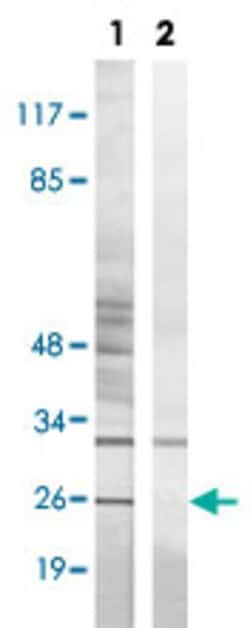
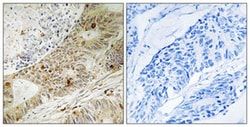
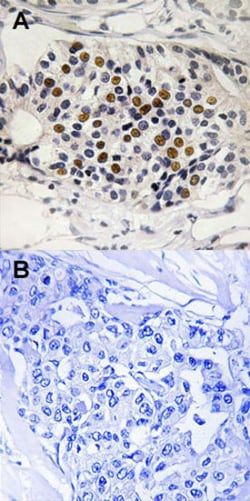
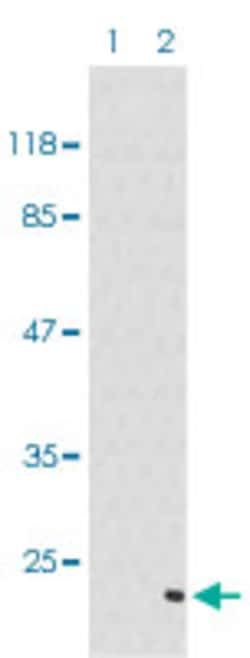
AURKB/AURKC (phospho T236/T202) polyclonal antibody detects endogenous levels of human AURKB/AURKC only when phosphorylated at threonine 236 and threonine 202.
Content And Storage
Store at -20°C.Aliquot to avoid repeated freezing and thawing.
Applications
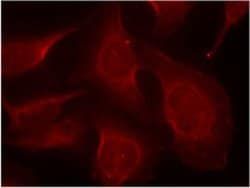
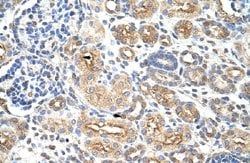
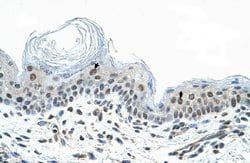
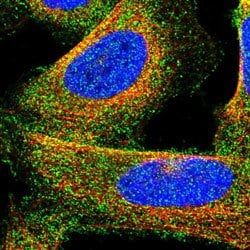
Immunohistochemistry (PFA fixed)
Conjugate
Unconjugated
Dilution
Immunohistochemistry (1:50-1:100) The optimal working dilution should be determined by the end user.
Gene Alias
AIK2/AIM-1/AIM1/ARK2/AurB/IPL1/STK12/STK5
Host Species
Rabbit
Purification Method
Affinity chromatography
Regulatory Status
RUO
Gene ID (Entrez)
9212/6795
Target Species
Human, Mouse, Rat
Form
Liquid
Related Products
Description
- This gene encodes a member of the Aurora subfamily of serine/threonine protein kinases
- The encoded protein is a chromosomal passenger protein that forms complexes with Aurora-B and inner centromere proteins and may play a role in organizing microtubules in relation to centrosome/spindle function during mitosis
- This gene is overexpressed in several cancer cell lines, suggesting an involvement in oncogenic signal transduction
- Alternative splicing results in multiple transcript variants
- [provided by RefSeq]