MilliporeSigma™ ZNT3, Rabbit, Unlabeled, Polyclonal,
Manufacturer: MilliporeSigma™
Select a Size
| Pack Size | SKU | Availability | Price |
|---|---|---|---|
| Each of 1 | ABN994MI-Each-of-1 | In Stock | ₹ 37,825.00 |
ABN994MI - Each of 1
In Stock
Quantity
1
Base Price: ₹ 37,825.00
GST (18%): ₹ 6,808.50
Total Price: ₹ 44,633.50
Antigen
ZNT3
Classification
Polyclonal
Conjugate
Unconjugated
Gene
Slc30a3, Znt3
Host Species
Rabbit
Purification Method
Affinity Purified
Regulatory Status
RUO
Primary or Secondary
Primary
Test Specificity
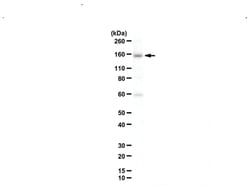
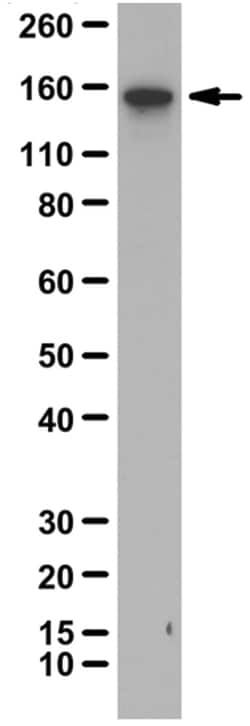
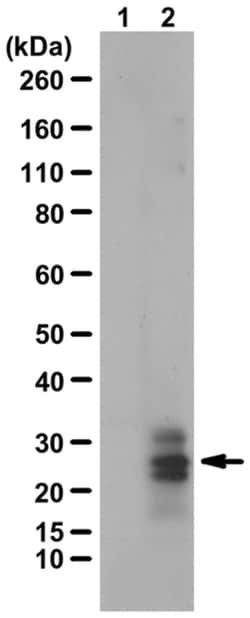
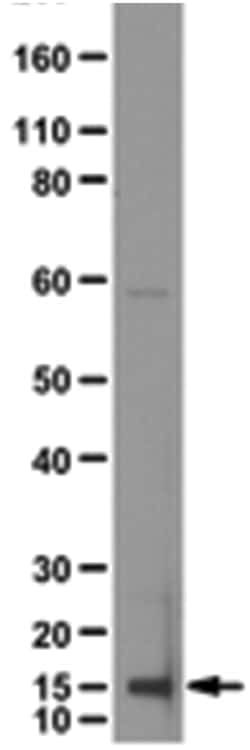
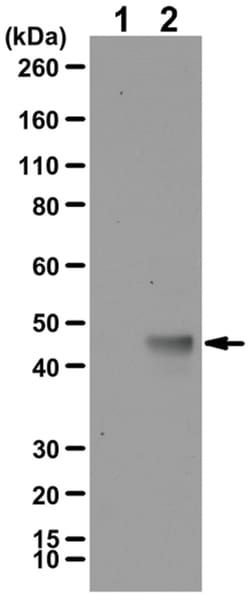
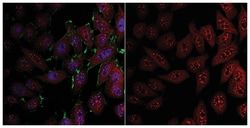
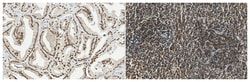
This polyclonal antibody specifically detected exogenously expressed murine ZnT-3 with no cross-reactivity toward exogenously expressed murine ZnT-1 or ZnT-2 (Palmiter, R.D., et al. (1996). Proc. Natl. Acad. Sci. U. S. A. 93(25):14934-14939). This polyclonal antibody specifically detected ZnT-3 expression in wild-type, but not Znt3-knockout, mouse brain tissues (Cole, T.B., et al. (1999). Proc. Natl. Acad. Sci. U. S. A. 96(4):1716-17121).
Content And Storage
Stable for 1 year at 2°-8°C from date of receipt.
Applications
Immunofluorescence, Immunohistochemistry, Western Blot
Concentration
Please refer to lot specific datasheet.
Formulation
Purified rabbit polyclonal antibody in buffer containing 0.1M Tris-Glycine (pH 7.4), 150mM NaCl with 0.05% Sodium Azide.
Gene Accession No.
P97441
Immunogen
MBP-tagged recombinant mouse ZnT-3 C-terminal fragment.
Quantity
100 μL
Research Discipline
Neuroscience
Gene ID (Entrez)
NP_035903
Target Species
Human
Related Products
Description
- RNA-binding protein 3 (UniProt P98179, O89086, Q925G0; also known as RNA-binding motif protein 3, RNPL) is encoded by the RBM3 (also known as RNPL) gene (Gene ID 5935, 19652, 114488) in human, mouse, and rat species
- RBM3 belongs to a evolutionarily conserved family of cold-inducible proteins that share a moderate conserved cold shock domain with 2 consensus RNA recognition motifs (RRM) at the N-terminal end
- In addition to stress adapting functions, RBM3 and its close homolog CIRP have been identified as clock genes, resembling AtGRP7 and AtGRP8 in Arabidopsis
- Unlike most cold shock proteins that are substantially induced only by deep hypothermia (below 20°C or freezing temperature), RBM3 is optimally induced under moderate hypothermia (32-33°C) and functions to trigger translation, thereby preventing a drastic reduction in protein synthesis under conditions of hypothermia
- Hypothermia attenuates PERK and eIF2a phosphorylation and subsequent apoptosis in the presence of ER stress
- RBM3 is shown to inhibit both PERK and eIF2a in the presence or absence of ER stress
- In addition, RBM3 expression is reduced during fever, resulting in an upregulation of temperature-sensitive miRNAs (thermomiRs) that are negatively regulated by RBM3
- these thermomiRs, including miR-142-5p and miR-143, are crucial in preventing pathological hyperthermia targeting fever-causing pyrogens.