HIF1A Polyclonal Antibody, Invitrogen™
Manufacturer: Thermo Scientific
Select a Size
| Pack Size | SKU | Availability | Price |
|---|---|---|---|
| Each of 1 | APSA6521-Each-of-1 | In Stock | ₹ 48,905.50 |
APSA6521 - Each of 1
In Stock
Quantity
1
Base Price: ₹ 48,905.50
GST (18%): ₹ 8,802.99
Total Price: ₹ 57,708.49
Antigen
HIF1A
Classification
Polyclonal
Conjugate
Unconjugated
Gene
HIF1A
Gene Alias
AA959795; ARNT interacting protein; ARNT2; ARNT-interacting protein; Basic-helix-loop-helix-PAS protein MOP1; bHLHe78; Class E basic helix-loop-helix protein 78; HIF; hif 1; hif 1a; HIF1; HIF1 alpha; HIF-1 alpha; HIF1a; hif-1a; hif1a.L; HIF1alpha; HIF-1alpha; HIF-1-alpha; HIF1-alpha; HIF1-alpha protein; hypoxia inducible factor 1 alpha; hypoxia inducible factor 1 alpha subunit; hypoxia inducible factor 1 alpha subunit L homeolog; hypoxia inducible factor 1 subunit alpha; hypoxia inducible factor 1 subunit alpha L homeolog; hypoxia inducible factor 1, alpha subunit; hypoxia inducible factor 1, alpha subunit (basic helix-loop-helix transcription factor); hypoxia inducible factor-1 alpha; hypoxia-inducible factor 1 alpha; hypoxia-inducible factor 1 alpha isoform I.3; hypoxia-inducible factor 1 alpha subunit; hypoxia-inducible factor 1, alpha subunit (basic helix-loop-helix transcription factor); hypoxia-inducible factor 1, alpha subunit (basic helix-loop-helix transcription factor) L homeolog; hypoxia-inducible factor 1-alpha; hypoxia-inducible factor-1 alpha; hypoxia-inducible factor1alpha; member of PAS protein 1; member of PAS superfamily 1; MOP1; PAS domain-containing protein 8; PASD8; XELAEV_18039792mg; XELAEV_18041137mg; xhif1a
Host Species
Rabbit
Purification Method
Antigen affinity chromatography
Regulatory Status
RUO
Gene ID (Entrez)
100337573, 100713113, 15251, 281814, 29560, 3091, 380141, 445838, 480348
Content And Storage
Store at 4°C short term. For long term storage, store at -20°C, avoiding freeze/thaw cycles.
Form
Liquid
Applications
ChIP Assay, ChIP sequencing (ChIP-seq), ELISA, Gel Shift, Immunocytochemistry, Immunohistochemistry (Frozen), Immunohistochemistry (Paraffin), Immunoprecipitation, Western Blot
Concentration
1 mg/mL
Formulation
PBS with 0.02% sodium azide
Gene Accession No.
O35800, Q16665, Q61221, Q9I8A9, Q9XTA5
Gene Symbols
hif-1a, HIF1A, hif1a.L
Immunogen
Fusion protein containing amino acids 432-528 of human HIF-1alpha
Quantity
100 μL
Primary or Secondary
Primary
Target Species
Bovine, Canine, Guinea Pig, Human, Mouse, Non-human Primate, Rat, X. laevis, Zebrafish
Product Type
Antibody
Isotype
IgG
Related Products




Description
- For ChIP, nuclear extracts are recommended
- Prior to immunostaining paraffin tissues, antigen retrieval with sodium citrate buffer (pH 6.0) is recommended
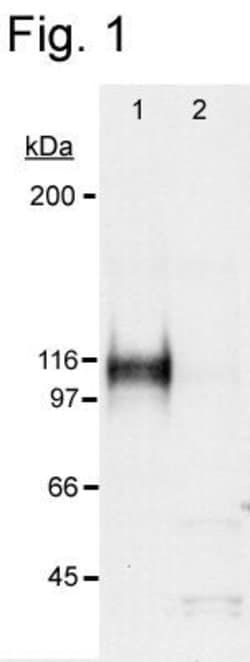
- Suggested positive control: Cos-7 Hypoxia Induced nuclear extract Kit6
- HIF1-alpha (HIF1A) is a subunit of HIF1, which is a transcription factor found in mammalian cells cultured under reduced oxygen tension
- HIF-1 is a heterodimer consisting of an alpha and beta subunit, both belonging to the basic-helix-loop-helix Per-aryl hydrocarbon receptor nuclear translocator-Sim (PAS) family of transcription factors
- HIF1 functions as a transcriptional regulator of the adaptive response to hypoxia
- Under hypoxic conditions, HIF-1 activates the transcription of over 40 genes, including erythropoietin, glucose transporters, glycolytic enzymes, vascular endothelial growth factor, HILPDA, and other genes whose protein products increase oxygen delivery or facilitate metabolic adaptation to hypoxia
- HIF1-alpha regulates hypoxia-mediated apoptosis, cell proliferation and tumor angiogenesis
- Hypoxia which induces p53 protein accumulation, directly interacts with HIF1-alpha and reduces hypoxia-induced expression of HIF1-alpha by promoting MDM2-mediated ubiquitination and proteasomal degradation under hypoxic conditions
- Recent studies suggest that induction of NOX4 by HIF1-alpha contributes to maintain ROS levels after hypoxia and hypoxia-induced proliferation
- In humans, it is located on the q arm of chromosome 14
- The C-terminal of HIF1A binds to p300
- p300/CBP-HIF complexes participate in the induction of hypoxia-responsive genes, including VEGF
- Hypoxia contributes significantly to the pathophysiology of major categories of human disease, including myocardial and cerebral ischemia, cancer, pulmonary hypertension, congenital heart disease and chronic obstructive pulmonary disease.