BDB557644
TNF Rat anti-Mouse, PE-Cy7, Clone: MP6-XT22, BD
Manufacturer: Fischer Scientific
Select a Size
| Pack Size | SKU | Availability | Price |
|---|---|---|---|
| Each of 1 | BDB557644-Each-of-1 | In Stock | ₹ 33,108.00 |
BDB557644 - Each of 1
In Stock
Quantity
1
Base Price: ₹ 33,108.00
GST (18%): ₹ 5,959.44
Total Price: ₹ 39,067.44
Antigen
TNF
Classification
Monoclonal
Concentration
0.2mg/mL
Formulation
Aqueous buffered solution containing ≤0.09% sodium azide.
Immunogen
Recombinant Mouse TNF
Quantity
0.1 mg
Research Discipline
Immunology
Target Species
Mouse
Isotype
IgG1
Applications
Flow Cytometry
Clone
MP6-XT22
Conjugate
PE-Cyanine7
Host Species
Rat
Purification Method
Affinity Purified
Regulatory Status
RUO
Primary or Secondary
Primary
Content And Storage
Store undiluted at 4°C and protected from prolonged exposure to light. Do not freeze.
Related Products




Description
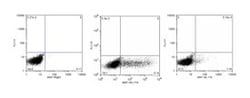
- The MP6-XT22 antibody specifically binds to mouse Tumor Necrosis Factor (TNF, also known as TNF-α)
- TNF is produced by many activated cell types including monocytes, macrophages, astrocytes, granulocytes, mast cells, T and B lymphocytes, NK cells, keratinocytes, fibroblasts, adipocytes, and certain tumor cells
- Activated cells express type II transmembrane TNF glycoproteins that associate as homotrimeric complexes
- After enzymatic cleavage, the extracellular regions of membrane TNF are shed as soluble homotrimers
- TNF is a potent multifunctional cytokine that can exert regulatory and cytotoxic effects on a wide range of normal lymphoid and non-lymphoid cells and tumor cells
- Although TNF serves as a primary mediator in protective immune responses against microbial and viral pathogens, it can also drive systemic pathophysiologic responses including septic shock, cachexia and autoimmune diseases
- Mouse TNF exerts its biological activities by binding and signaling through cell surface membrane Type I and Type II TNF Receptors (aka, TNFRI/CD120a and TNFRII/CD120b, respectively).