tPA Recombinant Rabbit Monoclonal Antibody (32B1), Invitrogen™
Manufacturer: Thermo Scientific
Select a Size
| Pack Size | SKU | Availability | Price |
|---|---|---|---|
| Each of 1 | FEMA550109-Each-of-1 | In Stock | ₹ 37,202.00 |
FEMA550109 - Each of 1
In Stock
Quantity
1
Base Price: ₹ 37,202.00
GST (18%): ₹ 6,696.36
Total Price: ₹ 43,898.36
Antigen
tPA
Classification
Recombinant Monoclonal
Concentration
3 mg/mL
Formulation
PBS with 50% glycerol and 0.02% sodium azide, pH 7.4
Gene Accession No.
P00750
Gene Symbols
PLAT
Immunogen
A synthesized peptide derived from Human PLAT
Quantity
100 μL
Primary or Secondary
Primary
Target Species
Human
Form
Liquid
Applications
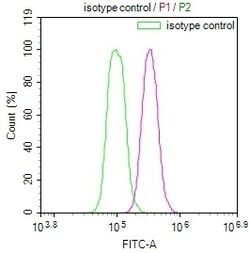
ELISA, Flow Cytometry
Clone
32B1
Conjugate
Unconjugated
Gene
PLAT
Gene Alias
3.4.21.68, Alteplase, AU020998, AW212668, D8Ertd2e, PATISS, plasminogen activator, tissue, plasminogen activator, tissue type, plasminogen/activator kringle, PLAT, Reteplase, serine protease, t plasminogen activator, tissue plasminogen activator, tissue-type plasminogen activator, Tissue-type plasminogen activator chain A, Tissue-type plasminogen activator chain B, TPA, t-PA, t-plasminogen activator
Host Species
Rabbit
Purification Method
Affinity chromatography
Regulatory Status
RUO
Gene ID (Entrez)
5327
Content And Storage
-20°C or -80°C if preferred
Isotype
IgG
Related Products


Description
- TPA converts the abundant, but inactive, zymogen plasminogen to plasmin by hydrolyzing a single Arg-Val bond in plasminogen
- By controlling plasmin-mediated proteolysis, it plays an important role in tissue remodeling and degradation, in cell migration and many other physio pathological events
- It specifically cleaves the Arg- -Val bond in plasminogen to form plasmin, and is comprised of a heterodimer of chain A and chain B held by a disulfide bond
- TPA binds to fibrin with high affinity
- This interaction leads to an increase in the catalytic efficiency of the enzyme between 100-and 1000-fold, due to an increase in affinity for plasminogen
- Similarly, binding to heparin increases the activation of plasminogen
- Binding to laminin and fibronectin has also been demonstrated
- TPA also binds to mannose receptor and the low-density lipoprotein receptor-related protein (LRP1)
- These proteins are involved in TPA clearance
- TPA binds to annexin II and to cytokeratin 8
- As yet unidentified interactions on endothelial cells and vascular smooth muscle cells (VSMC) lead to a 100-fold stimulation of plasminogen activation
- In addition, binding to VSMC reduces TPA inhibition by PAI-1 by 30-fold.